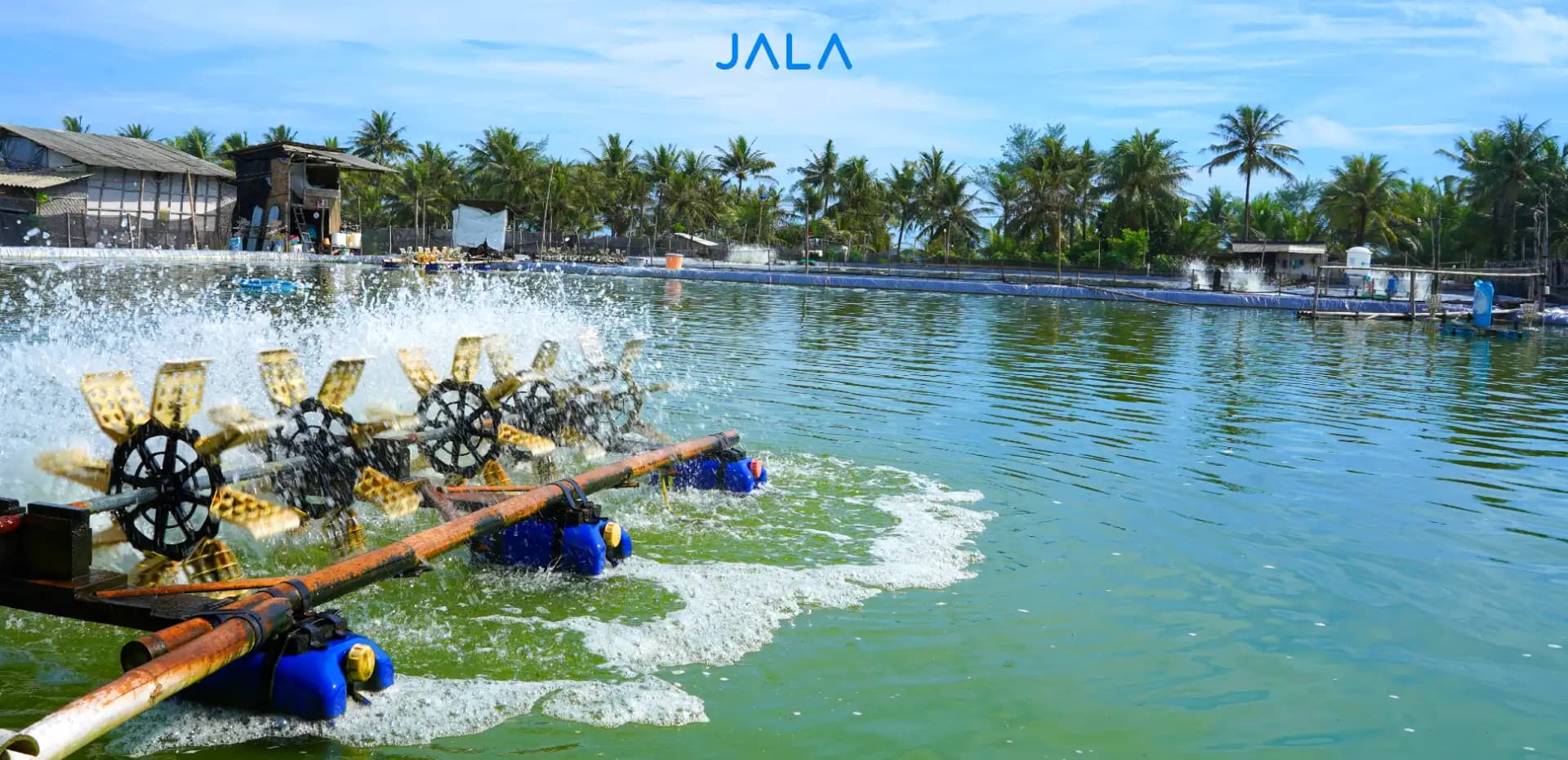
There is no need to panic if shrimp pond water suddenly turns reddish, similar to the color of tea. Water color is one of the most important indicators in shrimp farming, as it reflects the balance of the pond ecosystem. A drastic color change, especially to red usually signals an imbalance in water quality. This condition is not uncommon and often occurs in ponds with high stocking density, intensive feeding practices, and poor water circulation.
To help farmers respond appropriately, this article explains the main causes of red pond water and practical steps to manage and prevent it.
Causes of Red Pond Water
Red discoloration in shrimp ponds is generally caused by a red tide event, which refers to the excessive growth of certain plankton species such as Ceratium or Peridinium. This bloom is commonly triggered by an overload of nutrients originating from uneaten feed and shrimp waste that accumulate in the water. High water temperatures combined with low dissolved oxygen levels further accelerate algal growth. In addition, poor water circulation allows plankton to concentrate in specific areas, making the red color more visible across the pond.
Impacts of Red Pond Water on Shrimp
- Dissolved oxygen levels drop sharply at night, causing shrimp to rise to the water surface.
- Toxic gases increase (H₂S and NH₃) which can lead to mass shrimp mortality if not managed promptly.
- Shrimp become more susceptible to stress, resulting in reduced appetite and slower growth.
- A sudden plankton crash may occur, making the pond water turbid, foul-smelling, and severely degrading overall water quality.
How to Handle Red Pond Water
When red discoloration appears, the priority is to stabilize the pond ecosystem. The following steps can help mitigate the condition: