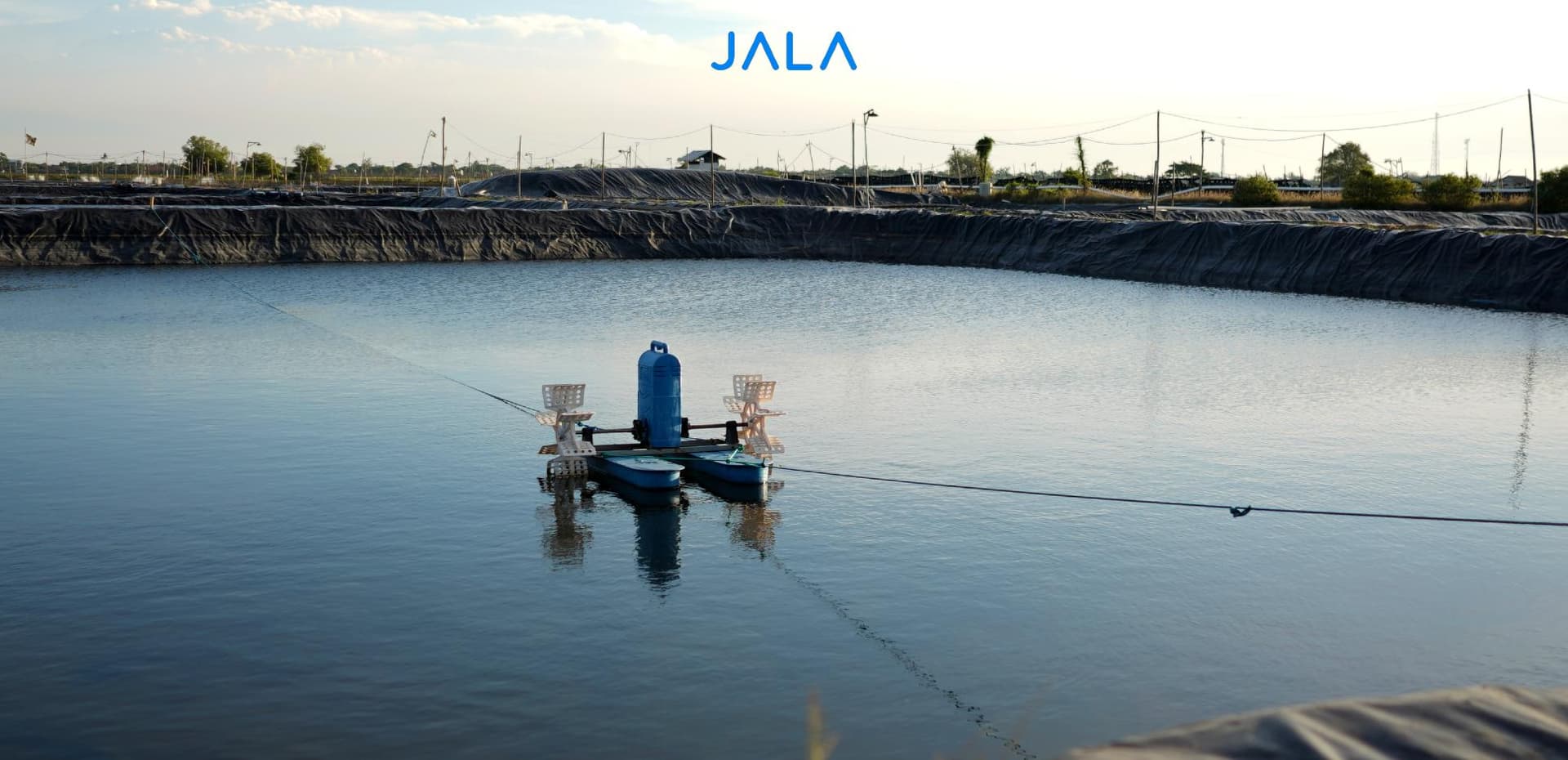
Ensuring sufficient and high quality oxygen is one of the most critical aspects of shrimp farming. Oxygen supply typically comes from water exchange, paddlewheels, blowers, and similar aeration tools. Among these, paddlewheels are essential because they significantly increase dissolved oxygen levels in the pond. Proper placement and the right number of paddlewheels directly influence shrimp health, growth, and overall production results.
The main function of paddlewheels is to supply dissolved oxygen (DO), improve water circulation so waste accumulates at the pond center, maintain temperature distribution and prevent stratification, enhance feed efficiency, reduce disease risk, and increase carrying capacity.
This article explains how to determine the correct number of paddlewheels and how to properly install them.
How to Determine the Number of Paddlewheels in a Pond
The required number of paddlewheels depends on how much oxygen each unit can supply relative to the shrimp biomass, stocking density, and pond size. The basic formula is:
 Note:
Note:
- For a 1 HP paddlewheel: One unit supports ±500 kg of shrimp
- For a 2 HP paddlewheel: One unit supports ±1,000 kg of shrimp
Example calculation: A 1,000 m² pond is stocked at 100 PL/m². The target harvest size is 20 g per shrimp (size 50), with 100% survival rate.
- Total shrimp: 1,000 m² × 100 = 100,000 shrimp
- Biomass: 100,000 × 20 g = 2,000,000 g = 2,000 kg
- Required 1 HP paddlewheels: 2,000 kg ÷ 500 = 4 units
- Required 2 HP paddlewheels: 2,000 kg ÷ 1,000 = 2 units
How to Position and Orient Paddlewheels
To ensure optimal performance, follow these placement guidelines: