Cholesterol is a type of fat that plays an essential role in building cells and producing hormones. However, high cholesterol is often associated with an increased risk of heart disease, leading many people to be more cautious about the foods they eat. One of the most debated foods is shrimp. Does shrimp actually cause high cholesterol, or is it simply another misconception about dietary cholesterol? At the same time, many people overlook the valuable nutrients shrimp provides as part of a healthy diet.
So, can people with high cholesterol still eat shrimp? Let's take a closer look at the facts!
The Nutritional Facts About Shrimp
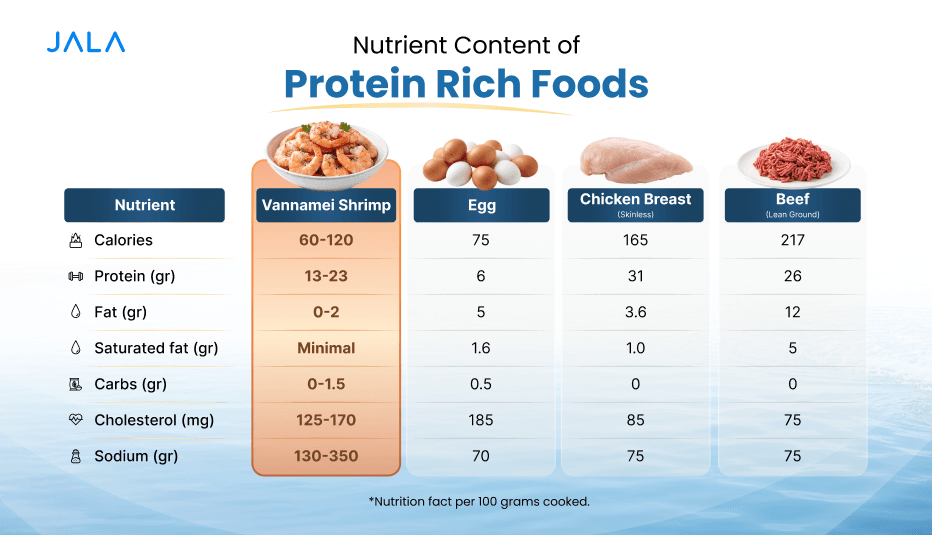
Many people avoid shrimp because it naturally contains a relatively high amount of cholesterol. A 100 gram serving of fresh shrimp contains approximately 160-189 mg of cholesterol. However, dietary cholesterol does not necessarily translate into higher levels of Low-Density Lipoprotein (LDL), commonly known as bad cholesterol, in the bloodstream.
What makes shrimp different from many other cholesterol containing foods is its very low saturated fat content and its rich supply of omega-3 fatty acids. A 100 gram serving of shrimp contains less than 0.3 grams of saturated fat, while other common sources of dietary cholesterol contain considerably more, such as eggs (5 gram ), skinless chicken breast (3.6 gram), and beef (12 gram).