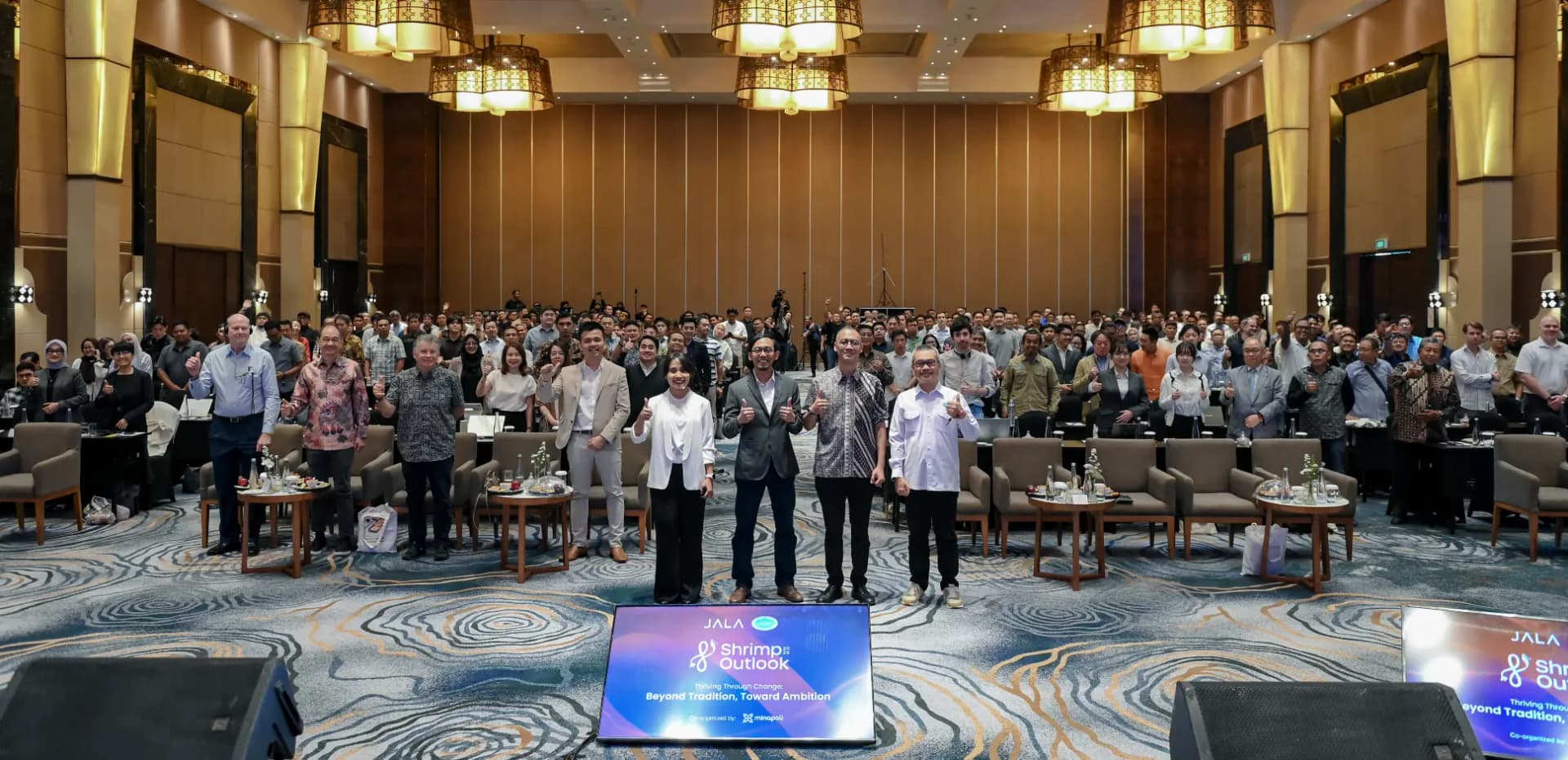
Yogyakarta, Indonesia — JALA successfully hosted Shrimp Outlook 2026, an annual event that brings together cross-sector stakeholders from across the shrimp industry to discuss current dynamics and the future direction of Indonesia’s shrimp sector. Held on February 12, 2026, at Royal Ambarrukmo Yogyakarta, the event also marked the official launch of the Shrimp Outlook 2026 Report, a comprehensive publication presenting data-driven insights on global market trends, Indonesian farm performance, and on-the-ground industry challenges.
Carrying the theme “Thriving Through Change: Beyond Tradition, Toward Ambition”, Shrimp Outlook 2026 aimed to encourage data-driven decision-making, strengthen collaboration among stakeholders, and provide a more holistic view of the challenges and opportunities shaping the shrimp industry in the years ahead.
Indonesia’s Shrimp Industry Performance in 2025
Indonesia’s progress is reflected in the improvement of its median farm productivity. “We extend our appreciation to shrimp farmers across Indonesia who continued stocking in 2025 despite facing various challenges”, said Liris Maduningtyas, CEO of JALA. Indonesia also maintained its position as the world’s fourth-largest shrimp exporter, although export volume declined slightly by 0.7% year-on-year.

Liris added that the industry’s current priority is strengthening the branding of Indonesian shrimp as safe, clean, and free from harmful substances. Closer collaboration among stakeholders, particularly policymakers will be essential to enhancing competitiveness in the global market. Striking the right balance between cost efficiency and profitability will also be critical to ensuring the long-term sustainability of the industry.
Strategies to Strengthen a More Resilient Shrimp Industry
Strengthening farming strategies begins with understanding each farm’s operational capacity and ensuring consistency across the supply chain in delivering high-quality end products. Robins McIntosh, Executive Vice President of Charoen Pokphand Foods, stated “Beyond maintaining shrimp health, it is equally important to safeguard the surrounding ecosystem to enable optimal growth”.
Shrimp price volatility remained one of the major challenges for Indonesian farmers in 2025. Price fluctuations were largely influenced by US import policies, the US remains Indonesia’s primary export destination alongside concerns related to antibiotic residues and radioactive contamination. These developments have prompted Indonesia to consider market diversification more seriously. “Indonesia needs to explore opportunities in other markets, such as China, Japan, and European Union, where shrimp imports are currently experiencing strong growth”, said Willem van der Pijl, Director of the Global Shrimp Forum.
As a consequence of supply-demand dynamics, stabilizing prices also requires ensuring consistent demand. For Indonesia’s shrimp industry, this means prioritizing product safety to maintain consumer trust. “We continue to conduct rigorous testing to comply with all SOPs required by export destination countries. At the same time, we need stronger assurance regarding the safety of upstream raw materials”, said Anna Maria, Executive Secretary of Asosiasi Pengusaha Pengolahan dan Pemasaran Produk Perikanan Indonesia.
Kevin Sidharta of Haven Foods highlighted the importance of trust in global trade, stating, “Competing on price is important, but maintaining consumer trust is paramount”. In line with this, Erwin Dwiyana, Marketing Director at PDSPKP under the Ministry of Marine Affairs and Fisheries, affirmed that efforts will be made to rebrand Indonesian shrimp to enhance its credibility and positioning in the global market.
Strong Cross-Sector Participation
 Shrimp Outlook 2026 drew more than 500 participants, including shrimp farmers, suppliers, industry players, investors, and academics. The event was supported by several of strategic partners, including DSM-Firmenich, Genics, Kona Bay, INVE Aquaculture, Suri Tani Pemuka (STP), Panca Sukses Lestari, as well as all sponsors and partner organizations that contributed to advancing Indonesia’s shrimp industry.
A More Resilient Indonesian Shrimp Farming Productivity
As part of the event series, JALA officially released the Shrimp Outlook 2026 Report. The report presents data-driven analysis on global shrimp market conditions, shrimp farming performance and behavior in Indonesia, key industry challenges, and forward-looking projections that can serve as a strategic reference for industry stakeholders.
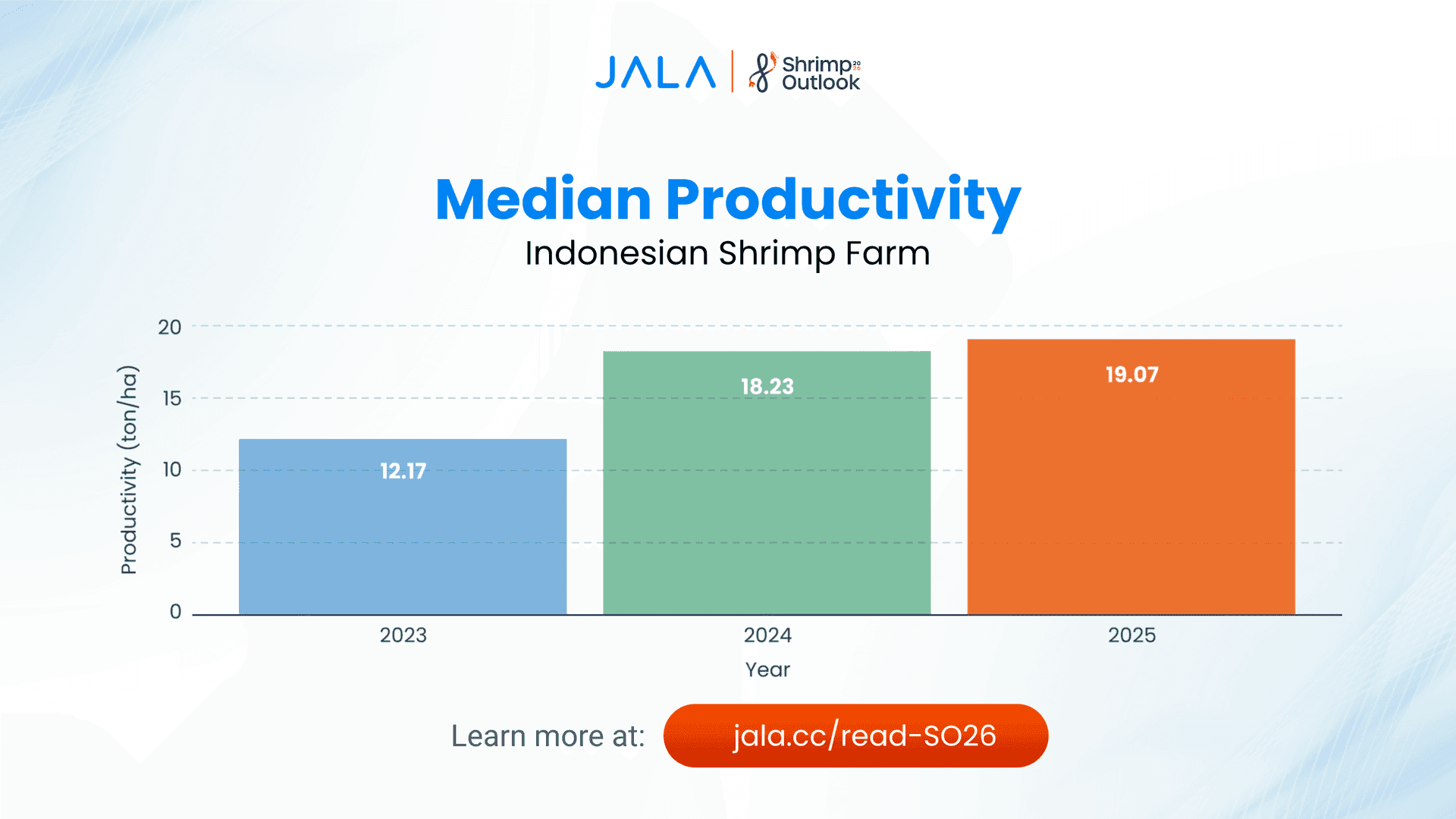
Throughout 2025, median shrimp farm productivity in Indonesia particularly within the medium stocking density category (80–150 PL/m²) increased from 18.23 tons per hectare to 19.07 tons per hectare, reflecting the resilience of Indonesian shrimp farmers.
Learn more in the Shrimp Outlook 2026 Report, available for free at: https://jala.cc/read-SO26 The full report in English will be available soon.