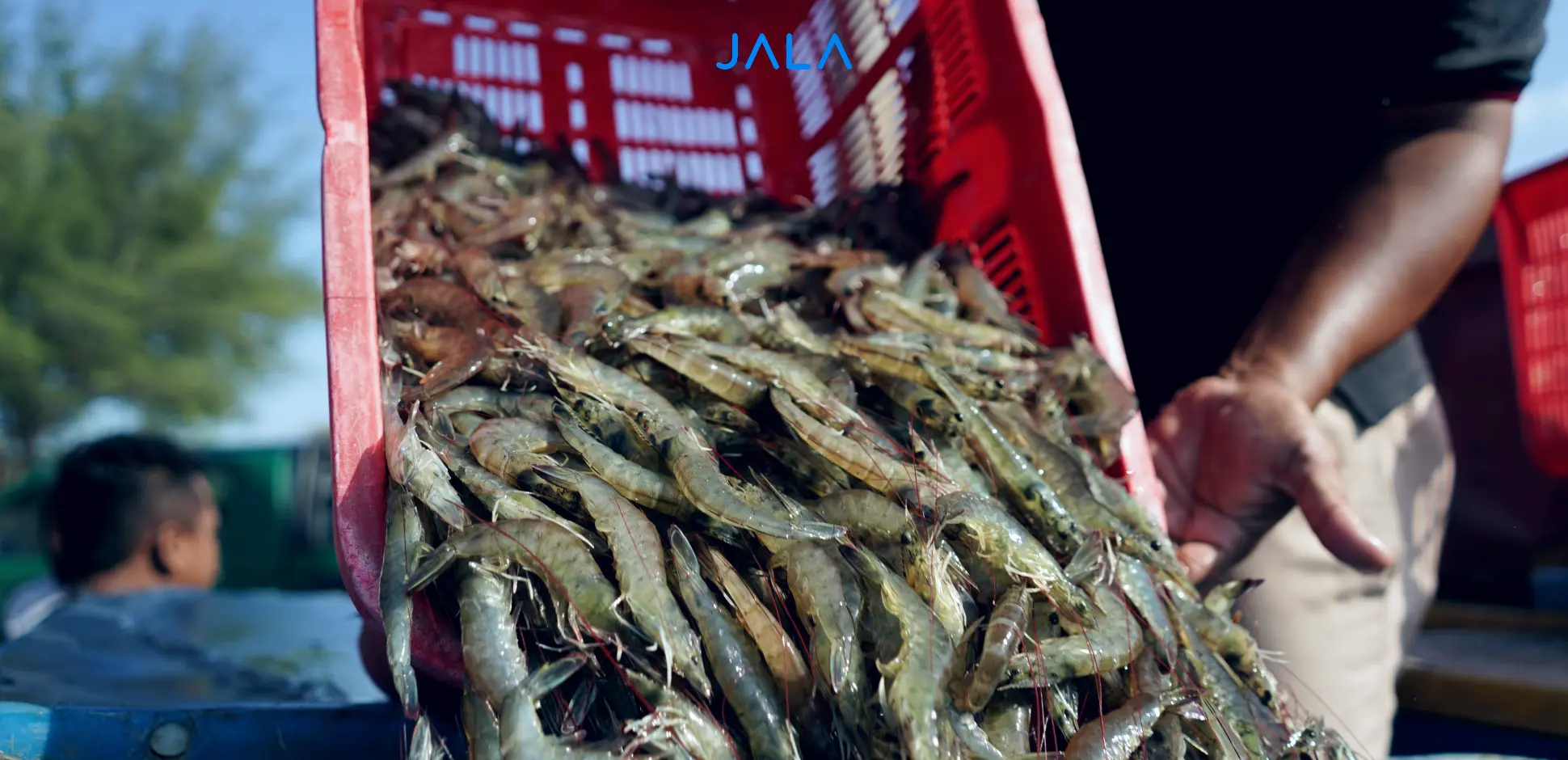
Shrimp is one of Indonesia’s leading export commodities, with strong demand in the global market. Indonesia currently ranks as the world’s fourth largest shrimp exporter, following Ecuador, India, and Vietnam. Vannamei shrimp remains the country’s primary export species due to its high nutritional value and suitability for high-density farming. According to data from Shrimp Insights, between January-September 2025, Indonesia’s shrimp export volume reached 154,201 thousand metric tons, valued at approximately USD 1,330 billion.
To remain competitive in the global market, Indonesia must continue to build trust by consistently delivering high quality shrimp. Export grade shrimp are determined through a strict sorting process at processing plants. Below are several characteristics that commonly cause shrimp to be rejected during factory sorting.
1. Black Spot on the Shell
Shrimp showing black spots are typically rejected by processing plants, as some export destinations, such as Japan do not tolerate shrimp with this condition. Black spots are often caused by prolonged exposure to sunlight, especially when shrimp are not immediately stored in ice after harvest. In some cases, hormonal reactions in the shrimp’s head can also trigger dark pigmentation on the shell.
2. Algae Attached to the Shrimp
Export markets such as the United States and China do not accept shrimp with algae attached to their bodies. Algae growth can occur during cultivation when water clarity is too high, allowing excessive sunlight penetration. Algae found on shrimp at the processing stage may also result from insufficient washing during post-harvest handling.
3. Brownish Color and Under Color
Several export markets, particularly China require shrimp to appear bright white and fresh. As a result, shrimp with a brownish hue or under color are often rejected. Brown discoloration is commonly caused by stress during harvesting or prolonged post-harvest handling. Under color may occur when shrimp remain too long after harvest or when shrimp die due to technical issues during farming.