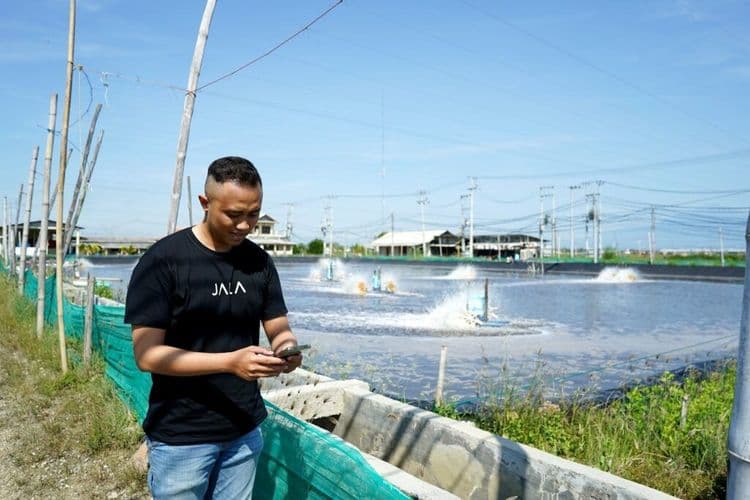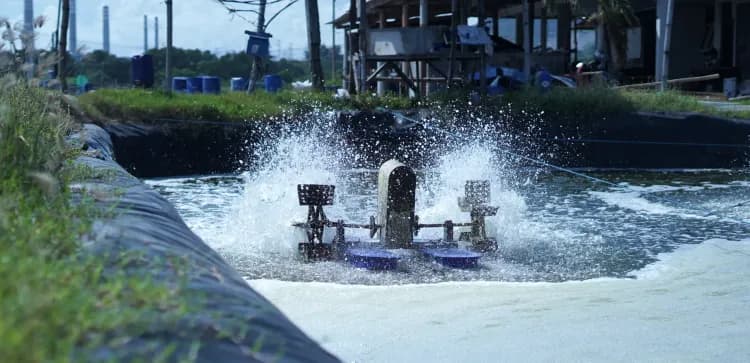
A comprehensive cultivation report is how farmers tell the full story of a production cycle. It captures how costs are spent, how shrimp grow over time, and how environmental conditions shape the final results. Each section plays a specific role, and together they form a complete picture that supports meaningful conclusions. Here’s how to structure and understand shrimp cultivation report.
General Farm Information
![[EN] Informasi Umum Tambak.png](https://strapi.jala.tech/uploads/EN_Informasi_Umum_Tambak_f250e78960.png) Before diving into performance analysis, the report begins with key information about the cycle being reviewed. This section includes the farm name, cultivation period from stocking to harvest, farm location that reflects environmental conditions, and number of cycles per batch. These details provide essential context, helping readers interpret the data more accurately.
Before diving into performance analysis, the report begins with key information about the cycle being reviewed. This section includes the farm name, cultivation period from stocking to harvest, farm location that reflects environmental conditions, and number of cycles per batch. These details provide essential context, helping readers interpret the data more accurately.
Pond Financial Performance
1. Financial summary
![[EN] Rangkuman Keuangan.png](https://strapi.jala.tech/uploads/EN_Rangkuman_Keuangan_fa63e688fb.png) This section presents the overall financial outcome of the cycle, including total expenses, total revenue from harvests, and the resulting net profit. The calculation covers all ponds within the farm, offering a complete view of financial performance.
This section presents the overall financial outcome of the cycle, including total expenses, total revenue from harvests, and the resulting net profit. The calculation covers all ponds within the farm, offering a complete view of financial performance.
2. Expenses composition
![[EN] Komposisi Pengeluaran.png](https://strapi.jala.tech/uploads/EN_Komposisi_Pengeluaran_ed98890fd3.png) Costs are categorized into components such as feed, energy, saprotam (farm inputs), fry (post larvae), and operational expenses. This breakdown highlights which components contribute the most to total costs.
Costs are categorized into components such as feed, energy, saprotam (farm inputs), fry (post larvae), and operational expenses. This breakdown highlights which components contribute the most to total costs.
3. Net profit per pond
![[EN] Laba Bersih per Kolam.png](https://strapi.jala.tech/uploads/EN_Laba_Bersih_per_Kolam_6ac26bec33.png) At this part, the analysis becomes more detailed. Each pond is presented individually, including pond area, stocking density, culture duration, and net profit. This allows for comparison between ponds within the same farm and reveals performance variations.
At this part, the analysis becomes more detailed. Each pond is presented individually, including pond area, stocking density, culture duration, and net profit. This allows for comparison between ponds within the same farm and reveals performance variations.
4. Partial harvest history
![[EN] Historis Panen Parsial.png](https://strapi.jala.tech/uploads/EN_Historis_Panen_Parsial_8944ab61b8.png) This section records each harvest event over time, including harvest date, shrimp age (DoC), count (pcs/kg), total harvest weight, and sales value. It helps illustrate harvesting strategies, growth progression, and how harvest timing impacts revenue.
This section records each harvest event over time, including harvest date, shrimp age (DoC), count (pcs/kg), total harvest weight, and sales value. It helps illustrate harvesting strategies, growth progression, and how harvest timing impacts revenue.
General Performance
1. Farm performance
![[EN] Performa Tambak.png](https://strapi.jala.tech/uploads/EN_Performa_Tambak_9328e25d55.png) This section summarizes key performance indicators such as productivity, biomass, shrimp count, SR, FCR, DoC, ADG, and stocking density. These metrics provide a quick assessment of whether the farm is operating at an optimal level. Performance targets are calculated at the start of the cycle based on cultivation plan, then continuously updated using recorded activities such as feed input, sampling, and partial harvests. Their accuracy depends heavily on the completeness and precision of the data recorded.
This section summarizes key performance indicators such as productivity, biomass, shrimp count, SR, FCR, DoC, ADG, and stocking density. These metrics provide a quick assessment of whether the farm is operating at an optimal level. Performance targets are calculated at the start of the cycle based on cultivation plan, then continuously updated using recorded activities such as feed input, sampling, and partial harvests. Their accuracy depends heavily on the completeness and precision of the data recorded.
2. Block performance
![[EN] Performa Blok.png](https://strapi.jala.tech/uploads/EN_Performa_Blok_2aeb8d2348.png) Performance is then compared across different blocks within the farm. Each block is evaluated using the same parameters, making it easier to identify which block performs better in terms of productivity, feed efficiency, or survival rate.
Performance is then compared across different blocks within the farm. Each block is evaluated using the same parameters, making it easier to identify which block performs better in terms of productivity, feed efficiency, or survival rate.
3. Pond performance
![[EN] Performa Kolam.png](https://strapi.jala.tech/uploads/EN_Performa_Kolam_ee23f6bb42.png) A more detailed view is provided at the pond level, including performance metrics and hatchery sources. This allows readers to identify which ponds are performing well and which require further attention.
A more detailed view is provided at the pond level, including performance metrics and hatchery sources. This allows readers to identify which ponds are performing well and which require further attention.
4. Performance by hatchery
![[EN] Performa Berdasarkan Hatchery.png](https://strapi.jala.tech/uploads/EN_Performa_Berdasarkan_Hatchery_0a84c2bb71.png) Shrimp performance is also analyzed based on the hatchery source. This helps determine whether the quality of post larvae from specific hatcheries contributes to better results.
Shrimp performance is also analyzed based on the hatchery source. This helps determine whether the quality of post larvae from specific hatcheries contributes to better results.
5. Performance by feed
![[EN] Performa Berdasarkan Pakan.png](https://strapi.jala.tech/uploads/EN_Performa_Berdasarkan_Pakan_25b1094f2b.png) This section explains the types and brands of feed used, along with their usage details. It connects feeding strategies with outcomes such as productivity, SR, and feed efficiency.
This section explains the types and brands of feed used, along with their usage details. It connects feeding strategies with outcomes such as productivity, SR, and feed efficiency.
6. Total feed consumption
![[EN] Total Konsumsi Pakan.png](https://strapi.jala.tech/uploads/EN_Total_Konsumsi_Pakan_54ba83d15c.png) Feed consumption is typically visualized as a trend throughout the cycle. This helps illustrate feeding patterns and provides insight into feed efficiency over time.
Feed consumption is typically visualized as a trend throughout the cycle. This helps illustrate feeding patterns and provides insight into feed efficiency over time.
Cycle Performance
1. Comparison with previous cycle
![[EN] ADG dengan Siklus Sebelumnya.png](https://strapi.jala.tech/uploads/EN_ADG_dengan_Siklus_Sebelumnya_56688969c9.png)
![[EN] SR dengan Siklus Sebelumnya.png](https://strapi.jala.tech/uploads/EN_SR_dengan_Siklus_Sebelumnya_01fb40c980.png)
![[EN] Produktivitas dengan Siklus Selumnya.png](https://strapi.jala.tech/uploads/EN_Produktivitas_dengan_Siklus_Selumnya_c26a9af738.png)
![[EN] FCR dengan Siklus Sebelumnya.png](https://strapi.jala.tech/uploads/EN_FCR_dengan_Siklus_Sebelumnya_36c43a86d6.png) Key metrics such as ADG, SR, productivity, and FCR are compared with the previous cycle to identify performance changes. This comparison highlights whether improvements have been achieved or if further evaluation is needed.
Key metrics such as ADG, SR, productivity, and FCR are compared with the previous cycle to identify performance changes. This comparison highlights whether improvements have been achieved or if further evaluation is needed.
2. Shrimp growth
![[EN] Pertumbuhan ABW.png](https://strapi.jala.tech/uploads/EN_Pertumbuhan_ABW_97b73c965a.png)
![[EN] Pertumbuhan ADG.png](https://strapi.jala.tech/uploads/EN_Pertumbuhan_ADG_7fddf8bd2f.png)
![[EN] Tabel ADG.png](https://strapi.jala.tech/uploads/EN_Tabel_ADG_a6cd8eafd0.png) Growth is analyzed through two main indicators, such as ABW and ADG. These metrics show whether shrimp growth is progressing as expected or facing limitations.
Growth is analyzed through two main indicators, such as ABW and ADG. These metrics show whether shrimp growth is progressing as expected or facing limitations.
3. Feed consumption
![[EN] Konsumsi Pakan 1.png](https://strapi.jala.tech/uploads/EN_Konsumsi_Pakan_1_00398dbbe3.png)
![[EN] Konsumsi Pakan 2.png](https://strapi.jala.tech/uploads/EN_Konsumsi_Pakan_2_ddddcd370f.png) Feed consumption is presented in greater detail, including consumption per population unit and feed index values. This helps evaluate feeding patterns and shrimp response, providing insight into feeding efficiency.
Feed consumption is presented in greater detail, including consumption per population unit and feed index values. This helps evaluate feeding patterns and shrimp response, providing insight into feeding efficiency.
4. Water quality
![[EN] Kualitas Air.png](https://strapi.jala.tech/uploads/EN_Kualitas_Air_b495b8f62b.png) This section includes key parameters such as DO, ORP, pH, salinity, and temperature monitored throughout the cycle. These data reflect environmental stability, and even small changes can directly affect shrimp health and performance.
This section includes key parameters such as DO, ORP, pH, salinity, and temperature monitored throughout the cycle. These data reflect environmental stability, and even small changes can directly affect shrimp health and performance.
5. Nutrients and plankton
![[EN] Tren Nitrat, Amonia, Fosfat.png](https://strapi.jala.tech/uploads/EN_Tren_Nitrat_Amonia_Fosfat_55f6beb5da.png)
![[EN] Plankton vs Fosfat.png](https://strapi.jala.tech/uploads/EN_Plankton_vs_Fosfat_5d621ab311.png)
![[EN] Plankton vs TOM.png](https://strapi.jala.tech/uploads/EN_Plankton_vs_TOM_ca7f1f8aed.png)
![[EN] Plankton vs Alkalinitas.png](https://strapi.jala.tech/uploads/EN_Plankton_vs_Alkalinitas_7c3d25ec6c.png) Nutrient dynamics and plankton composition are analyzed through trends in nitrate, ammonium, and phosphate, as well as plankton composition related to parameters like phosphate, TOM, and alkalinity. These changes indicate shifts in the pond ecosystem and potential impacts on environmental balance.
Nutrient dynamics and plankton composition are analyzed through trends in nitrate, ammonium, and phosphate, as well as plankton composition related to parameters like phosphate, TOM, and alkalinity. These changes indicate shifts in the pond ecosystem and potential impacts on environmental balance.
6. Microbiology
![[EN] Total Bakteri & Vibrio.png](https://strapi.jala.tech/uploads/EN_Total_Bakteri_and_Vibrio_c4f693ed31.png) The report also covers microbiological conditions by presenting total bacteria and vibrio levels. These indicators are essential for monitoring microbial balance and identifying potential disease risks.
The report also covers microbiological conditions by presenting total bacteria and vibrio levels. These indicators are essential for monitoring microbial balance and identifying potential disease risks.
Cultivation Performance Summary
![[EN] Rangkuman Kinerja Budi Daya.png](https://strapi.jala.tech/uploads/EN_Rangkuman_Kinerja_Budi_Daya_b2bb9e4a80.png)
![[EN] Final Conclusion.png](https://strapi.jala.tech/uploads/EN_Final_Conclusion_99c6631361.png) As a conclusion, all data and analyses are consolidated into a simplified overview. This section allows readers to quickly understand the final results, key influencing factors, and overall farm conditions without going through every detail. It serves as a decision making tool, helping identify what should be maintained and what needs improvement for the next cycle.
As a conclusion, all data and analyses are consolidated into a simplified overview. This section allows readers to quickly understand the final results, key influencing factors, and overall farm conditions without going through every detail. It serves as a decision making tool, helping identify what should be maintained and what needs improvement for the next cycle.
Create Automated Cultivation Reports with Pro Cycle
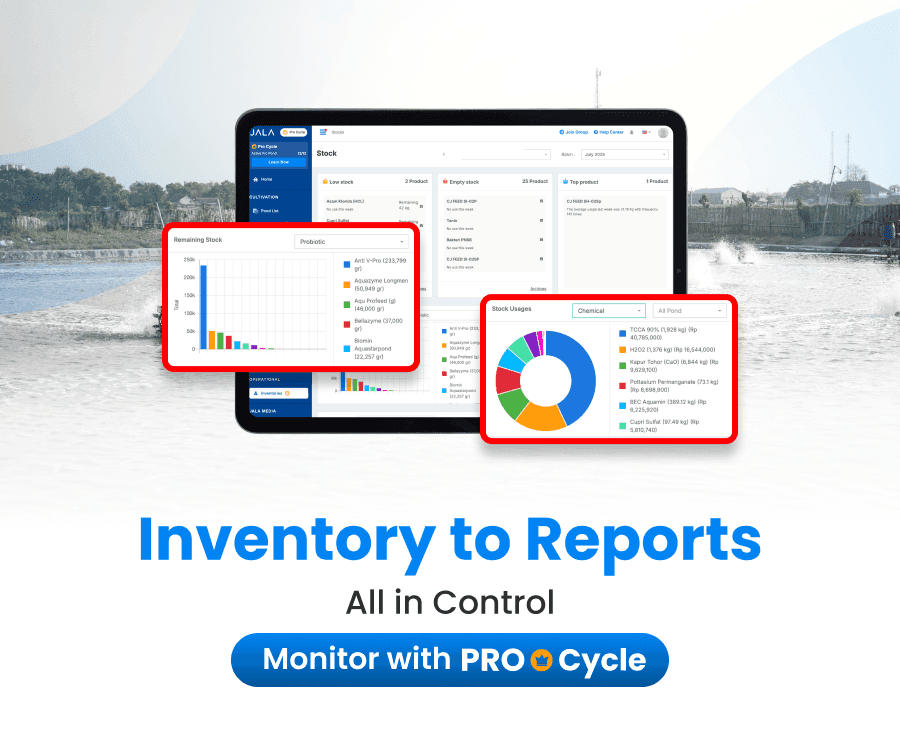
Building a report like this manually can be time consuming and prone to missing important details. With Smart Cultivation Report feature in Pro Cycle, all your operational data is automatically integrated into a comprehensive and structured report. With this feature, you can:
- Compare performance across ponds within a single cycle.
- Compare performance of the same pond across multiple cycles.
- Compare performance across ponds between different blocks.
Here’s an example of a cultivation report generated using Smart Farming Reports: jala.cc/smart-report-en
With automated reports like this, you can focus on understanding insights and making better decisions to improve performance in the next cycle, without spending time compiling reports manually.