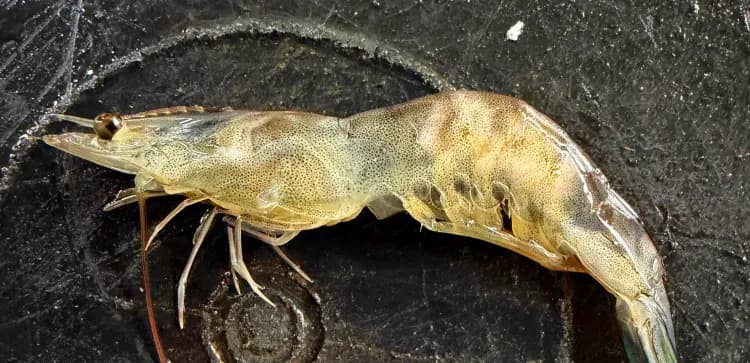
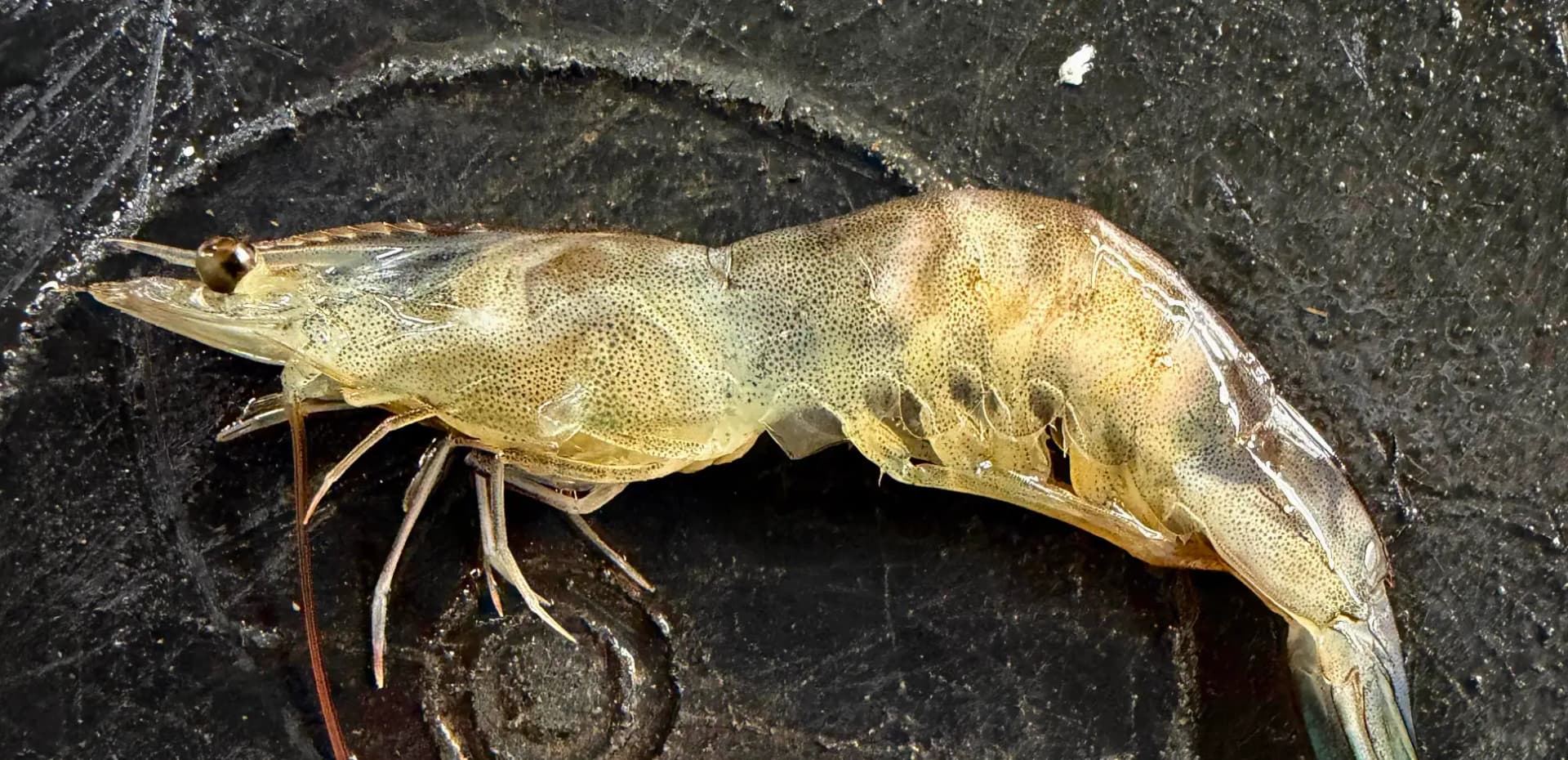
White Muscle Syndrome (WMS) is a health disorder in shrimp characterized by whitening of the muscle tissue and body stiffness. In recent years, WMS cases have increasingly been reported by farmers across Indonesia, particularly during the mid-to-late grow-out phase.
This article summarizes field findings from interviews with farmers and experts, supported by scientific references on possible causes and disease mechanisms.
Understanding WMS
WMS is a pathological condition in shrimp marked by:
- Milky white muscle, especially in the abdominal area.
- Porous muscle texture resembling softshell shrimp.
- Stiff body and reduced swimming ability.
- Decline in harvest quality and market price
In advanced stages, muscle tissue undergoes necrosis (cell death), disrupting normal contraction and relaxation. If left unmanaged, the condition can lead to mass mortality. Historically, WMS have often been associated with Infectious Myonecrosis Virus (IMNV). However, in several field cases, WMS symptoms were observed without IMNV confirmation, suggesting the involvement of other contributing factors.
Based on farmer interviews, WMS symptoms typically appear between DoC 30-50, with a critical phase often occurring at DoC 50-70. Some production cycles were forced to stop before harvest, including cases ending at DoC 58 with no harvest. In other ponds, farmers continued the cycle despite WMS indications when mortality remained manageable. Mortality tends to rise sharply in later stages, significantly reducing the final Survival Rate (SR).
Possible Causes of WMS
1. Suspected PDD bacterial infection
Field investigations indicate that WMS is not always linked to IMNV. Recent observations point to the possible involvement of Photobacterium damselae subsp. damselae (PDD), a marine pathogen known to cause tissue necrosis in aquatic organisms. PDD infections are generally considered secondary, meaning they require predisposing factors such as environmental stress or physiological imbalance. Scientifically, PDD produces toxins such as damselysin, which are cytotoxic and capable of damaging muscle tissue.