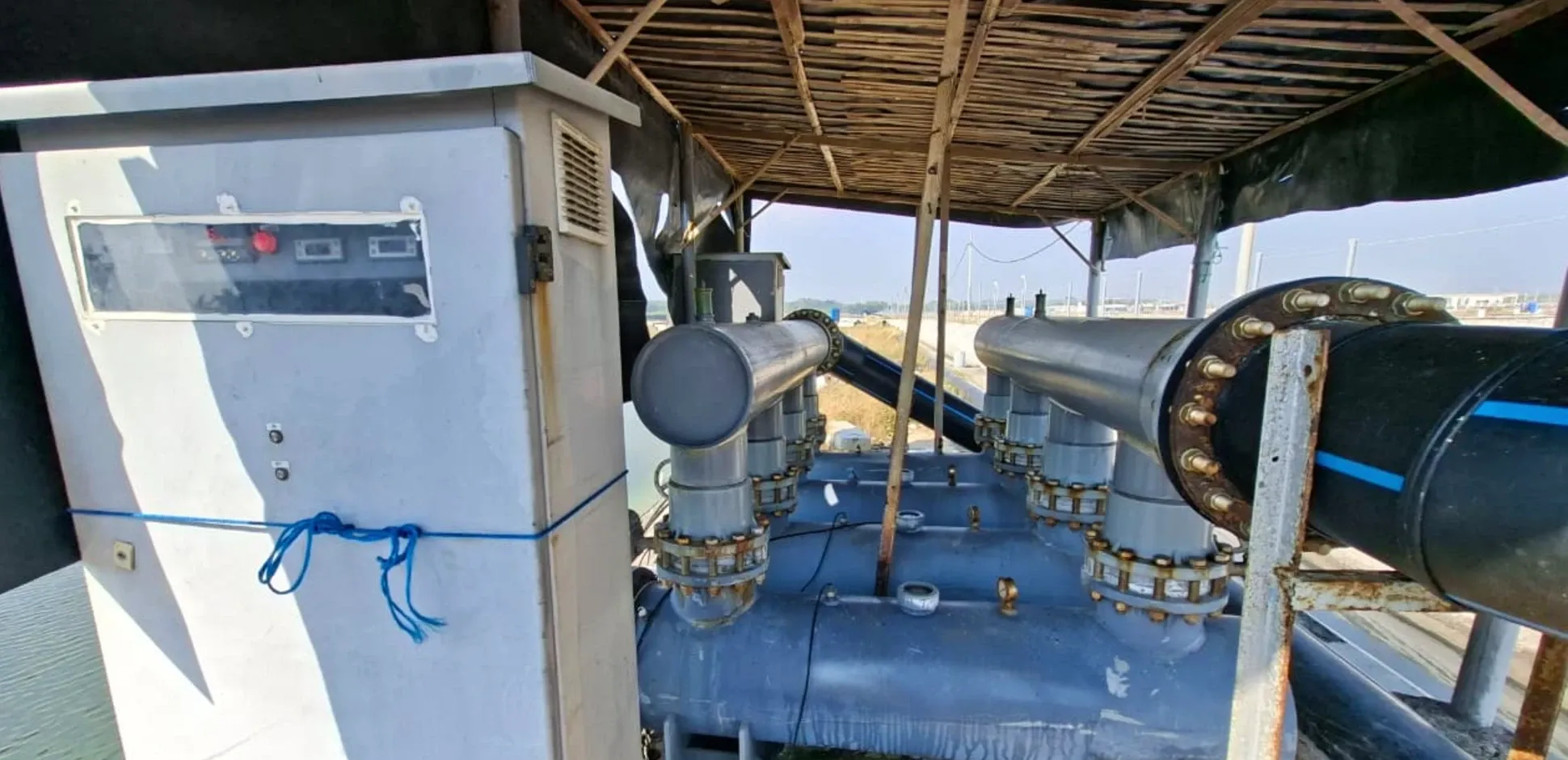
In modern shrimp cultivation, ultraviolet (UV) lights are widely recognized as an effective technology for maintaining water quality and reducing harmful bacterial populations. Many farmers even hope that UV systems can significantly reduce their reliance on chemical treatments in the pond.
However, the effectiveness of a UV system is determined by much more than its wattage or the number of units installed. Achieving optimal performance requires proper scientific principles and sound operational management. Below are the key factors that influence how effectively UV systems work in shrimp ponds.
1. Reduce TOM Before Water Enters the UV System
One of the most common mistakes is allowing water with high organic matter content to enter the UV system directly. UV light performs best in water with low levels of organic matter. As the Total Organic Matter (TOM) level increases, organic particles can block UV radiation, significantly reducing its ability to inactivate bacteria and other harmful pathogens.
To maximize UV performance, the recommended TOM levels are:
- Keep TOM below 60 ppm.
- For even better results, aim for a TOM value close to 40 ppm.
Several methods can be used to reduce TOM before water enters the UV system, including:
- Sedimentation or settling processes.
- Rackling or staged filtration.
- The application of oxidizing agents such as calcium hypochlorite or hydrogen peroxide, depending on field conditions.
2. Contact Time Determines UV Effectiveness
Many shrimp farmers are told that one or two UV chambers are sufficient to serve multiple ponds. In reality, this assumption should always be evaluated based on water flow rate and the available contact time.
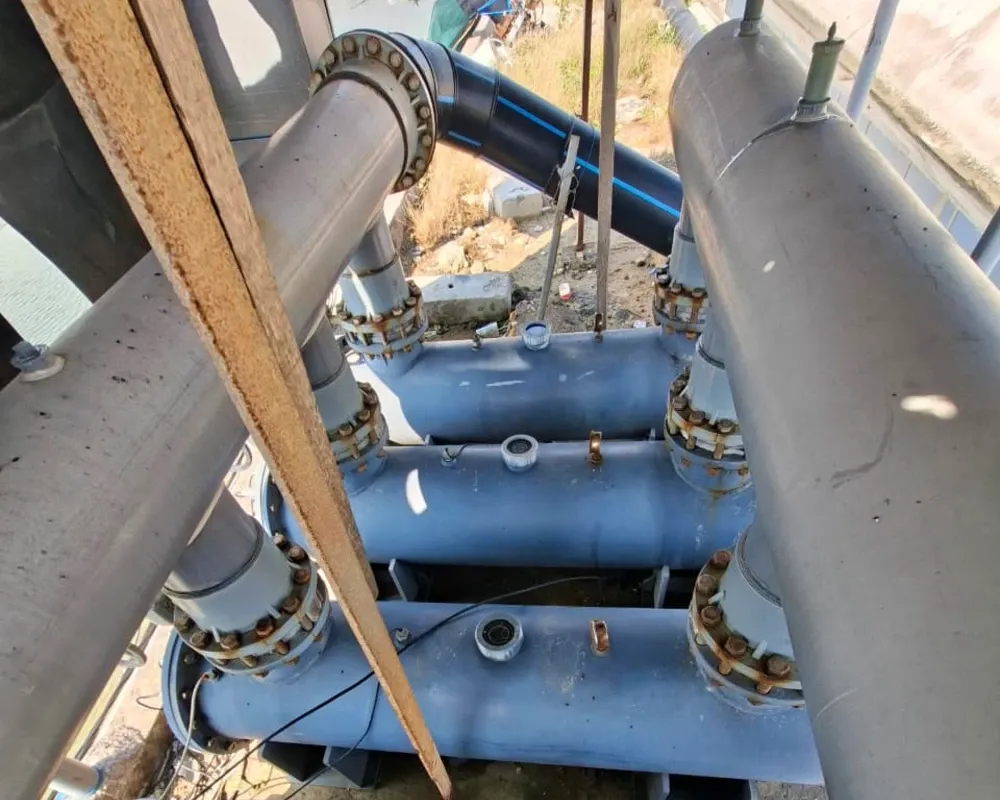
The primary function of UV light is to deliver enough energy to damage the genetic material of microorganisms, including vibrio bacteria. The faster water passes through the UV chamber, the less exposure it receives, reducing the system's ability to inactivate pathogens. For this reason, multi-chamber UV systems often deliver significantly better results than simpler configurations. An effective design typically includes:
- Water flowing sequentially through four UV chambers.
- A longer flow path to increase UV exposure time.
- More uniform UV distribution before the water enters the culture pond.
3. Routine Maintenance Keeps UV Systems Performing Efficiently
UV systems are not maintenance-free devices. Over time, quartz sleeves and the inside of the chamber become coated with scale, biofilm, and organic deposits that reduce UV penetration into the water. To maintain optimal performance, perform routine maintenance by:
- Cleaning at least one chamber every week.
- If possible, alternating the cleaning of two chambers each week.
- Regularly inspecting the ballast, electrical connections, and light intensity.
These simple maintenance practices often make the difference between a UV system that performs effectively and one that only increases operating costs.
4. UV Is a Supporting Technology, Not a Standalone Solution
UV is a valuable tool for improving water quality and controlling pathogens, but it should never be viewed as a complete replacement for comprehensive pond management. Successful shrimp farming still depends on a solid understanding of:
- Water quality management.
- Organic matter control.
- Plankton stability.
- Pond microbiology management.
- Adapting management practices throughout each production cycle.
Ultimately, even the best technology can only deliver maximum results when supported by strong biological knowledge and informed management decisions in the field.
Conclusion
When used correctly, UV systems can be one of the best investments in shrimp cultivation. To maximize their effectiveness, reduce TOM before water enters the UV system, provide sufficient contact time through a well-designed multi-chamber configuration, perform routine maintenance, and use UV as part of a comprehensive water quality management strategy rather than relying on it as a standalone solution.
In the end, successful shrimp cultivation depends not only on the technology being used but also on the farmer's ability to understand and manage the pond ecosystem as a whole. Technology can accelerate results, but scientific knowledge remains the foundation of sustainable and successful shrimp production.
This article is adapted from a TikTok video by Petambak Sombong.