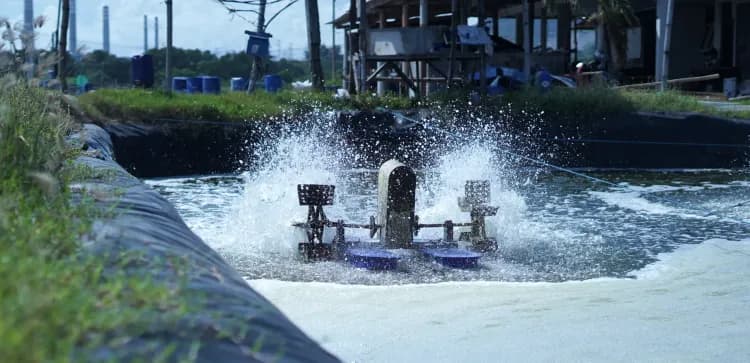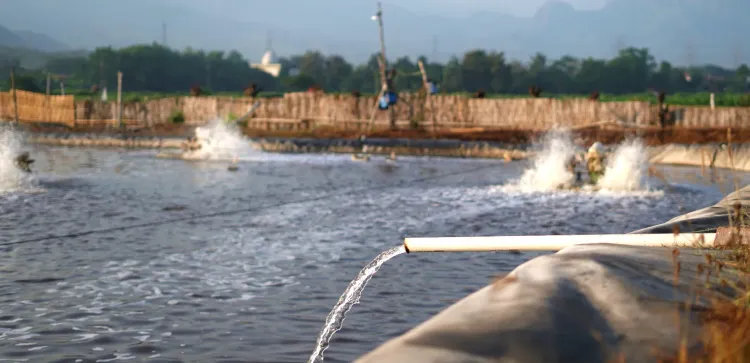
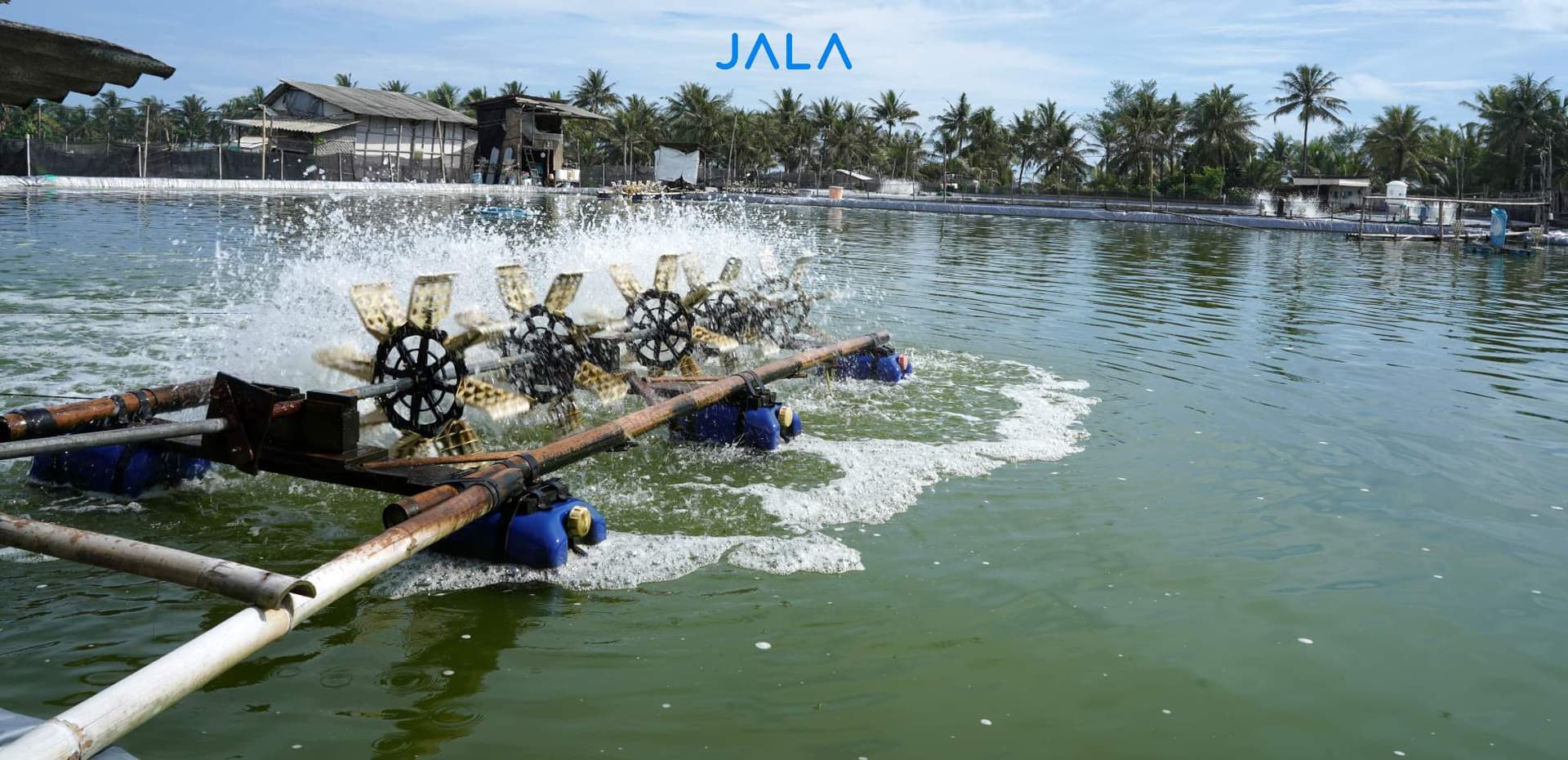
Paddlewheels are one of the most essential pieces of equipment in shrimp farms. In semi-intensive, intensive, and super-intensive farming systems with high stocking densities, natural oxygen replenishment alone is rarely sufficient to meet the pond's oxygen demand. This is where paddlewheels play a critical role by mechanically supplying oxygen and maintaining dissolved oxygen (DO) at optimal levels to support shrimp survival and growth.
The Role of Dissolved Oxygen in Pond Ecosystems
In shrimp ponds, oxygen is available in the form of DO. This oxygen is not only required by shrimp for respiration and metabolism but is also essential for phytoplankton and beneficial decomposing bacteria. For optimal shrimp growth, DO levels should be maintained at no less than 4 ppm.
When ponds experience hypoxia (DO below 2 ppm), several negative impacts can occur, including:
- Reduced immunity and increased disease risk: Shrimp become weak, their immune systems decline, and they become more susceptible to pathogens.
- Slower growth: Low oxygen reduces feed intake, disrupts molting, and impairs osmoregulation.
- Lower survival rate (SR): Survival rates can drop significantly. One of the earliest signs of low DO is shrimp swimming near the water surface in search of oxygen.
Low oxygen levels can also affect the pond environment itself. When DO at the pond bottom falls below approximately 3 ppm, anaerobic decomposition may occur, producing hydrogen sulfide (H₂S), a highly toxic gas that interferes with shrimp respiration. The risk of H₂S toxicity becomes even greater under low pH and low water temperature conditions.