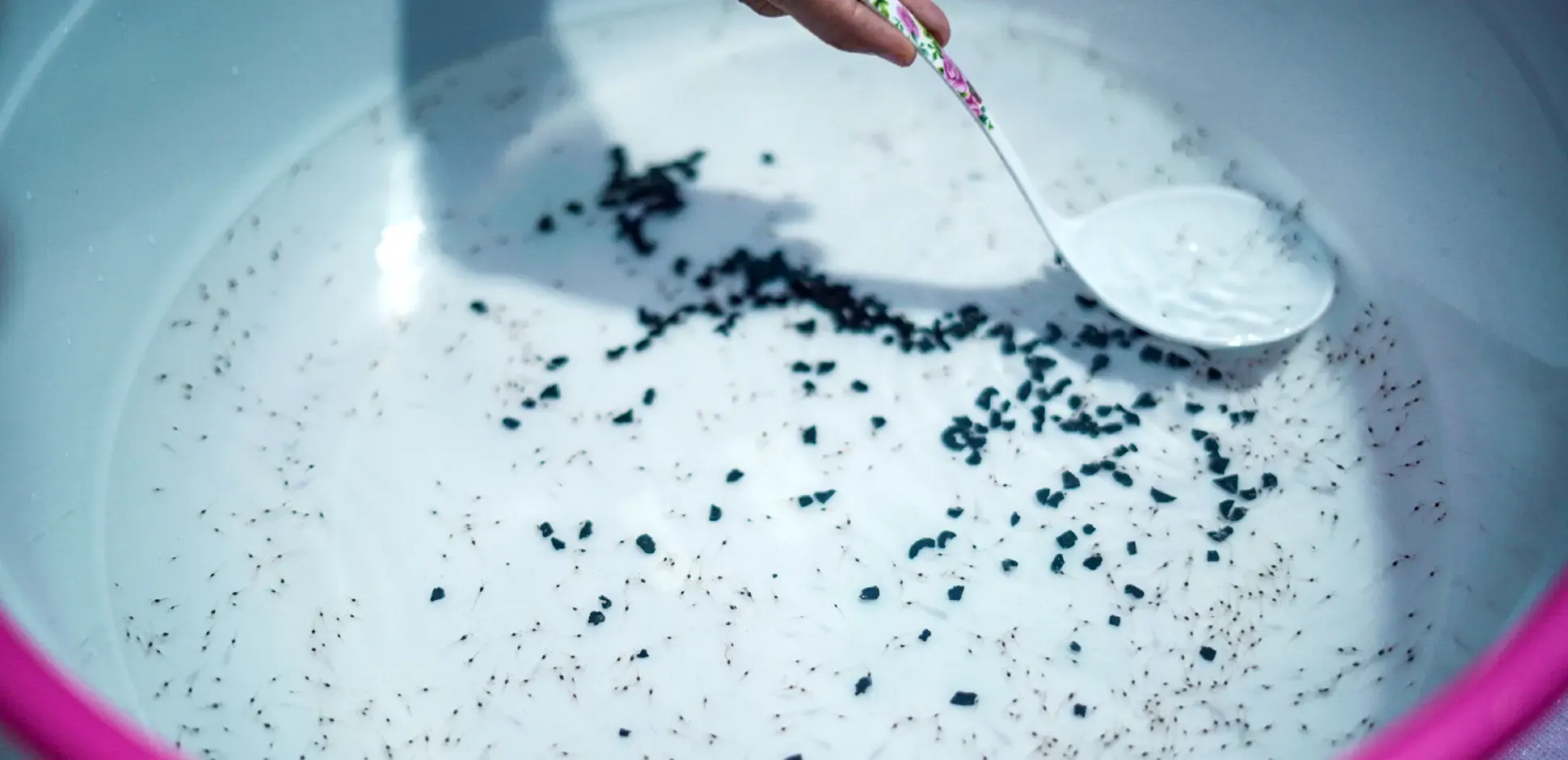
A failed harvest is one of the biggest concerns for shrimp farmers. It can mean losing not only money, but also the time and effort invested throughout the cultivation cycle. Although poor post-larvae (PL) quality is often blamed, it is not always the cause. If your regular hatchery consistently supplies good quality PL but harvest failures continue, it may be time to look at other factors, starting with the water used on your farm and how it is managed. Two things to check are the quality of your source water and whether you use a reservoir.
Causes of Shrimp Harvest Failure
Poor source water quality
Water from the sea or a well may contain substances or organisms that can affect your shrimp. Since shrimp live and grow in water, poor water quality can prevent them from growing well and make them more vulnerable to disease.
Check where your water comes from and assess its condition before pumping it into your ponds. You may not know exactly what the water contains, so it may need to be treated or disinfected before use. For example, seawater may not have been disinfected, while well water could be contaminated. These risks are especially important to consider if there is an outbreak of shrimp disease at nearby farms, as disease can spread between farms.
Read also: Water Source Quality Standard for Shrimp Cultivation