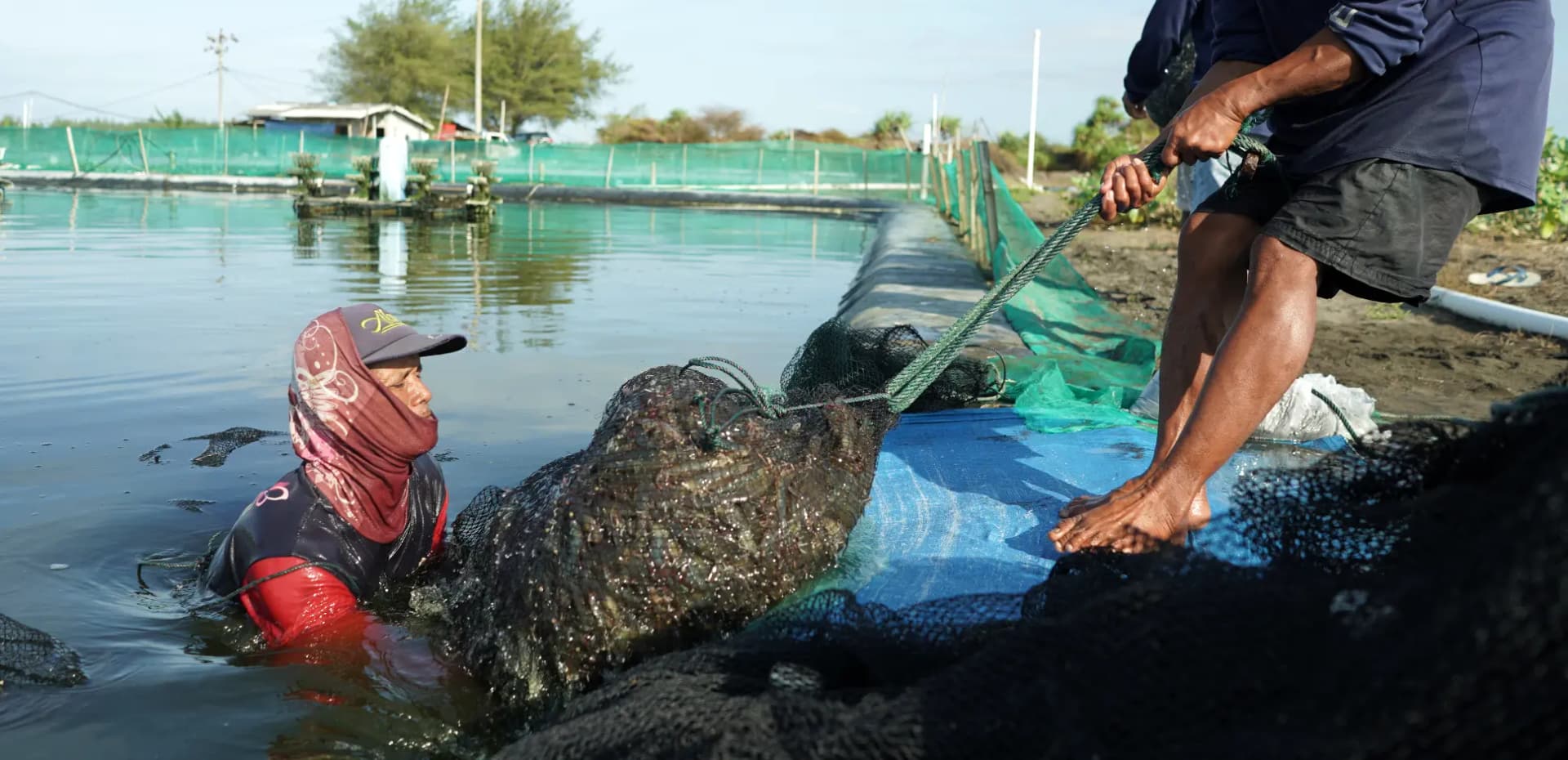
Harvesting is the final stage of shrimp farming and plays a major role in determining the overall success of the production cycle. That is why every harvest process should be well prepared, including selecting the right harvesting equipment. One of the most commonly used tools during shrimp harvest is the net. Using the right harvesting net is important to maintain shrimp quality during harvest and reduce the risk of injury, stress, or mortality.
In general, several types of nets are used in farms, each designed for different harvesting needs and operational methods.
Types of Nets Used for Shrimp Harvesting
1. Cast net
Cast nets are the most commonly used nets in farms, especially for sampling and partial harvest activities. These nets are made from woven nylon threads and equipped with weights along the edges so they can spread properly when thrown. Cast nets are typically used when shrimp reach around 10-13 gr/shrimp. The mesh size generally ranges from 0.5-1 inch and can be adjusted depending on the shrimp size being harvested.
The average length of a cast net is around 4.5 meters. To reduce the risk of shrimp escaping, farmers can use smaller mesh sizes when needed. The end of the net is also equipped with drawstrings and weights to help trap shrimp securely when lifting the net.
Some important things to consider when using a cast net include:
- Fold the net from the top until about 1.25 meters remain before throwing it.
- Position the weights behind the elbows to help the net spread evenly.
- Make sure the net is neatly arranged and not tangled before use.