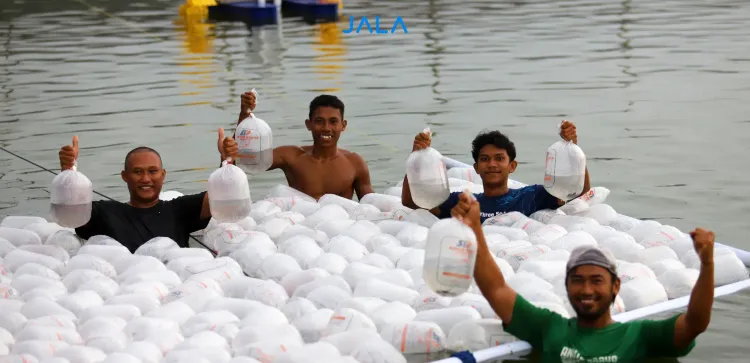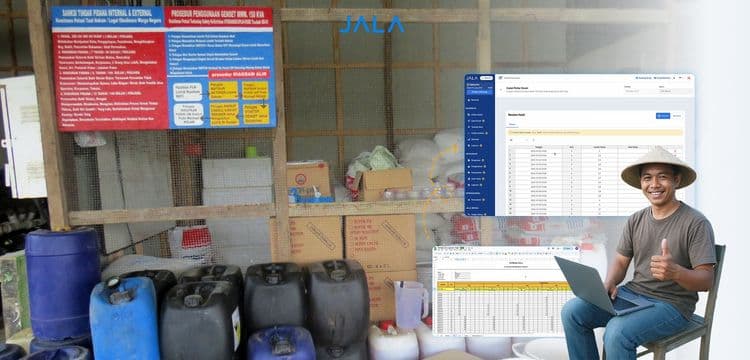

Shrimp cultivation can be a promising long-term investment. Indonesia also has strong potential to become a major shrimp-producing country, supported by its extensive land availability and favorable geographical conditions.
As a modern technology solution, JALA App is a shrimp farm management platform designed to help farmers manage their operations more practically and efficiently through web and mobile. The app leverages AI to record, monitor, and analyze farm conditions, helping farmers make more informed decisions throughout each cultivation cycle.
1. Cultivation Data Recording
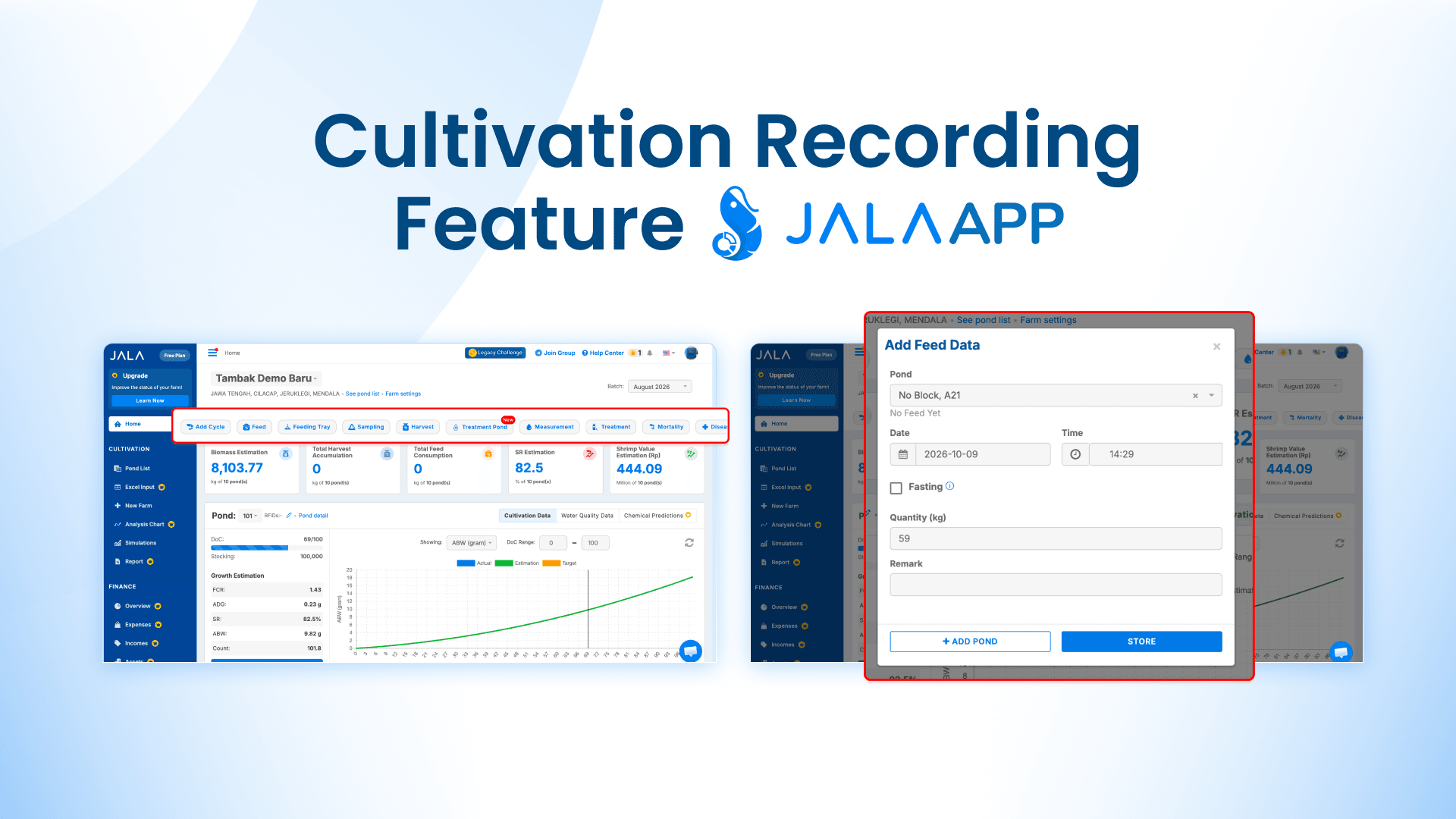 Consistent and disciplined record-keeping is the foundation of effective shrimp farm management. With JALA App's cultivation data recording feature, you can monitor key operational variables in one integrated platform. The feature allows farmers to record:
- Feed.
- Water quality.
- Treatments.
- Feed tray checks.
- Reservoirs.
- Sampling.
- Harvests.
- Diseases.
- Laboratory test results.

Recording cultivation data is easy, without having to enter everything manually. Simply give instructions with the help of AI, take a photo or scan your paper records, or upload an Excel file using a format you have prepared beforehand.
2. Estimation Feature
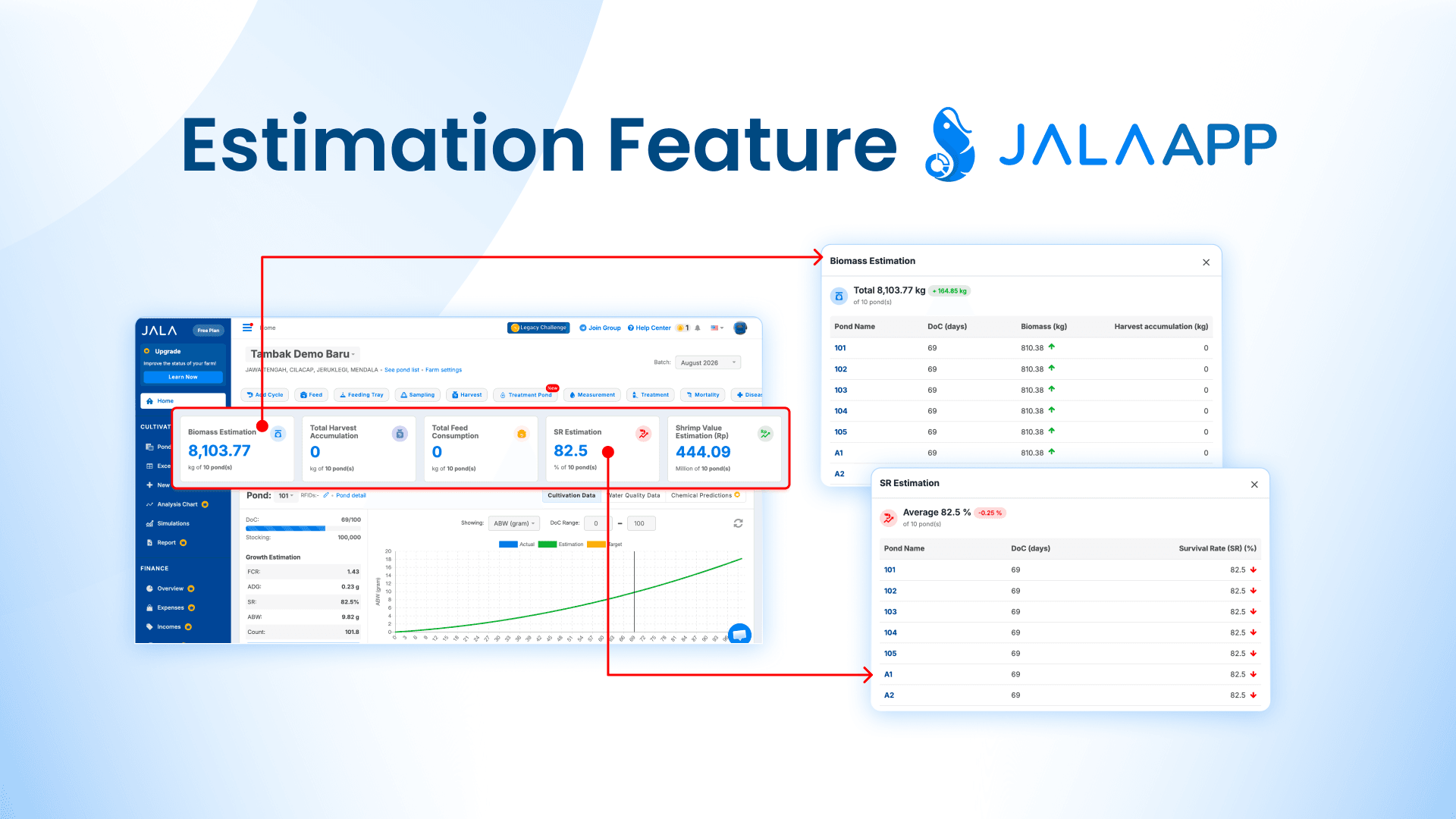 Throughout a cultivation cycle, farmers need reliable estimates to anticipate harvest outcomes and plan their next operational steps. JALA App's Estimation feature automatically calculates key parameters such as SR, biomass, ABW, ADG, total feed, FCR, and shrimp count based on actual cultivation data.
3. Analysis Charts
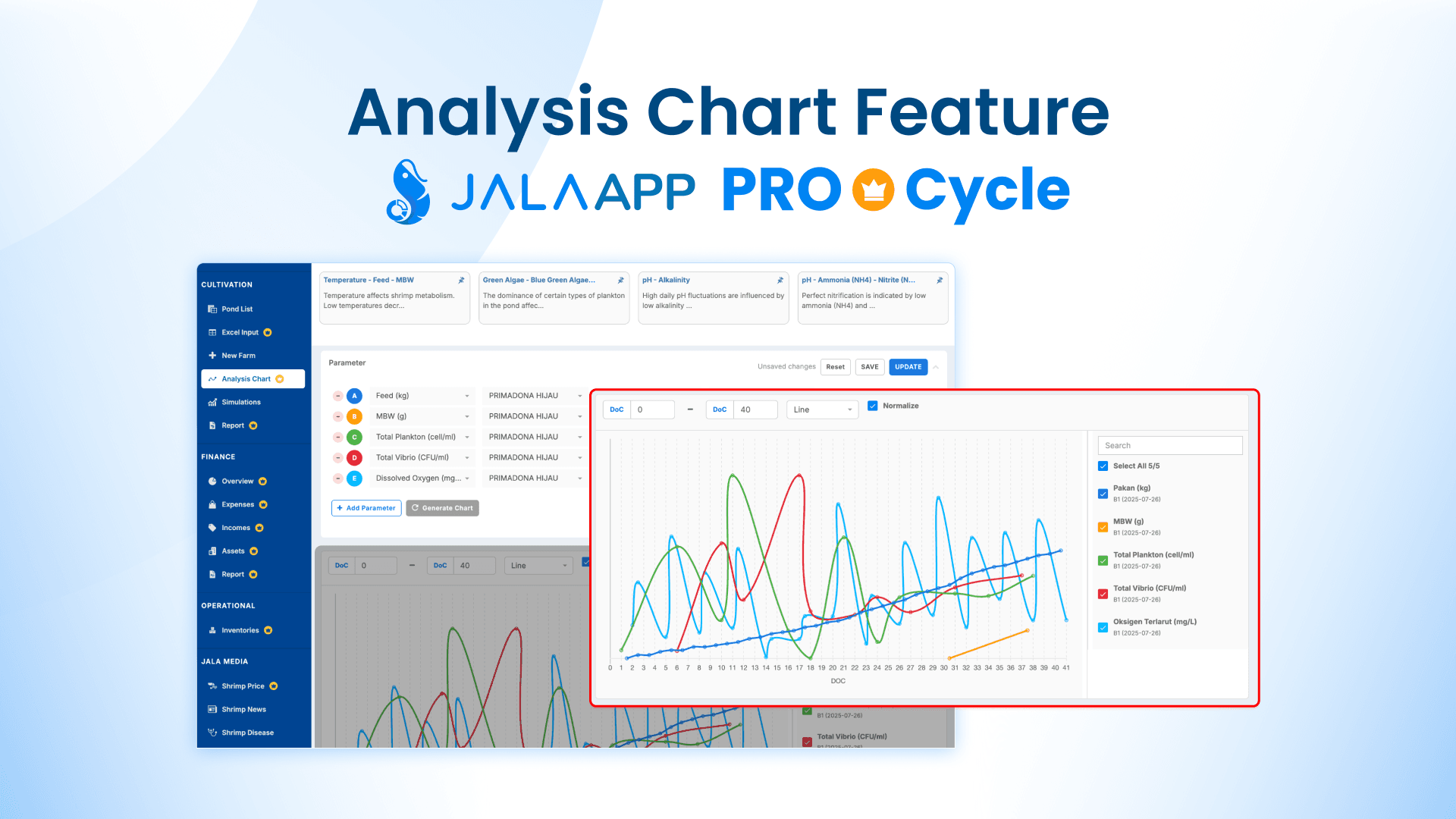 For Pro Cycle users, the web version of JALA App makes it easier to compare cultivation parameters through the Analysis Charts feature. You can select the parameters you want to analyze from one or multiple ponds, such as the correlation between total Vibrio, total bacteria, and organic matter levels. These charts are based on actual farm data, providing an objective reference for evaluating farm conditions and determining the next treatment or management steps.
4. Cultivation Cost Monitoring & Forecasting
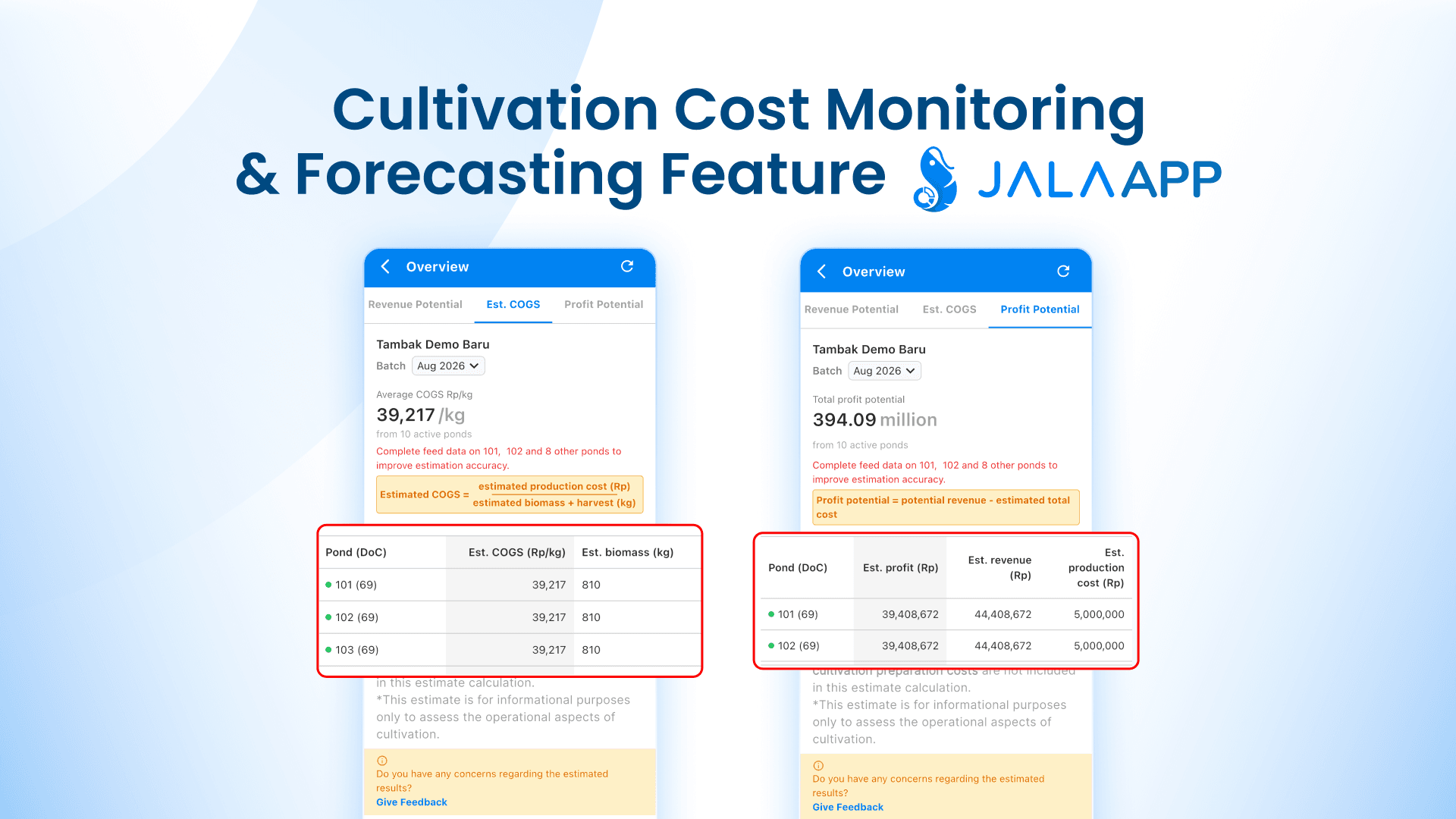 To make production and feed costs easier to monitor, the mobile version of JALA App provides a farming cost monitoring feature. Simply enter feed prices, initial stocking data, and daily feed consumption regularly to access information such as:
- Feed costs: Estimated feed budget based on shrimp requirements.
- Estimated production costs: Projected costs for land rental, asset depreciation, labor, farm supplies, and energy.
- Potential revenue: Projected revenue for each pond or cultivation cycle.
- Estimated cost of goods produced: The estimated cost required to produce 1 kg of shrimp.
5. Lunar Phase Feature
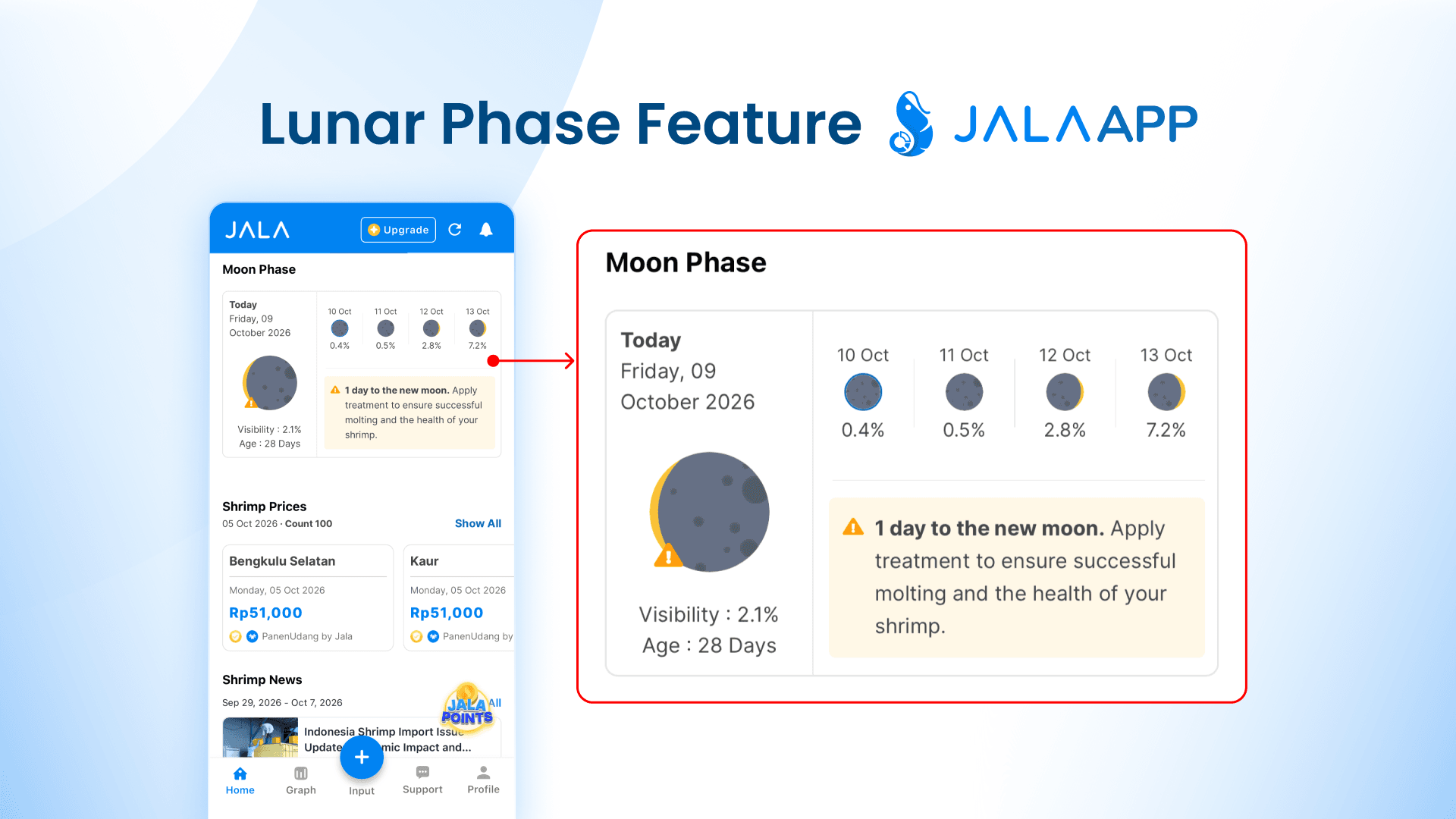 Understanding shrimp physiology can help farmers anticipate risks associated with failed molting and mass mortality. The mobile version of JALA App includes a Lunar Phase feature that displays the current lunar phase, a four-day forecast, and the exact dates of the full moon and new moon. The feature also provides light intensity percentages, helping farmers plan preventive management measures at the farm.
6. Plankton & Vibrio Composition Charts
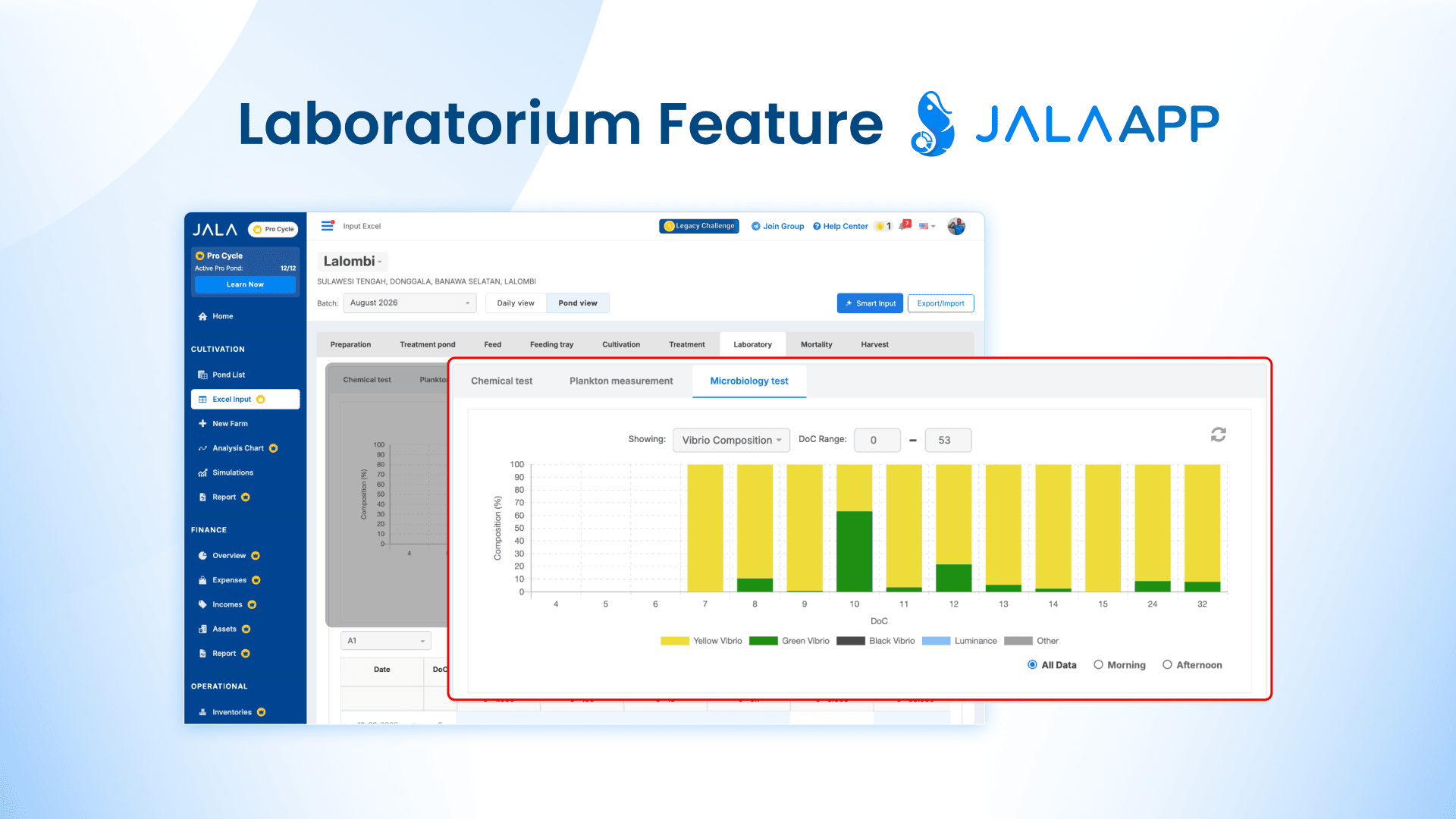 Microorganism populations can have a significant impact on pond water quality. With the chart monitoring feature, farmers can analyze colony-based parameters such as plankton and bacteria in greater detail. The system presents visual data on plankton composition and vibrio dynamics, helping farmers identify population changes and take timely intervention measures.
7. Simulation Feature
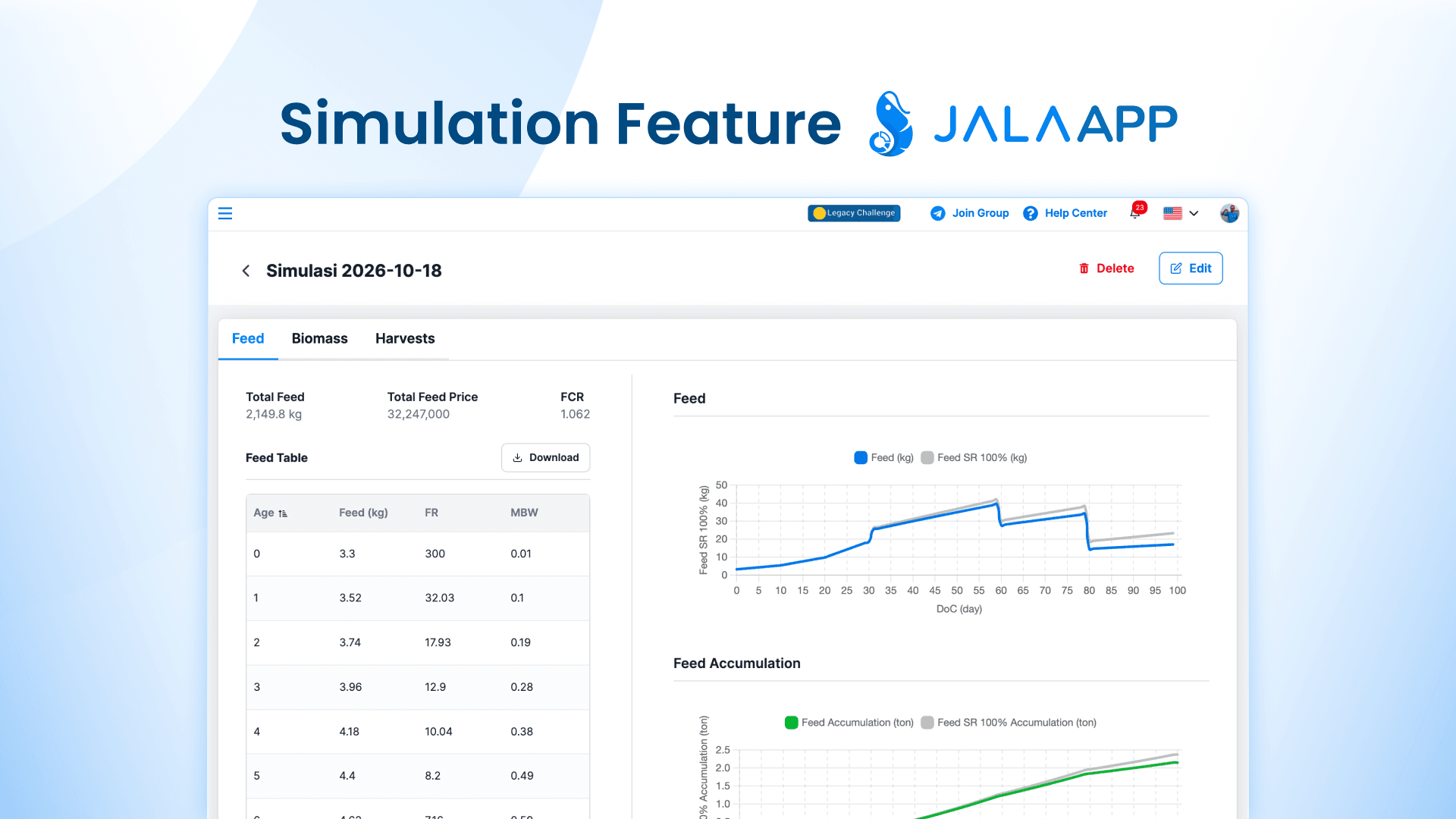 Thorough planning is essential before starting a new cultivation cycle to help maintain optimal profitability. The Simulation feature allows farmers to project their farming targets, including cycle duration, target final shrimp size, SR, and partial harvest scenarios. The simulation provides comprehensive estimates for biomass, total feed requirements, projected capital, and potential revenue.
8. Chemical Prediction Feature
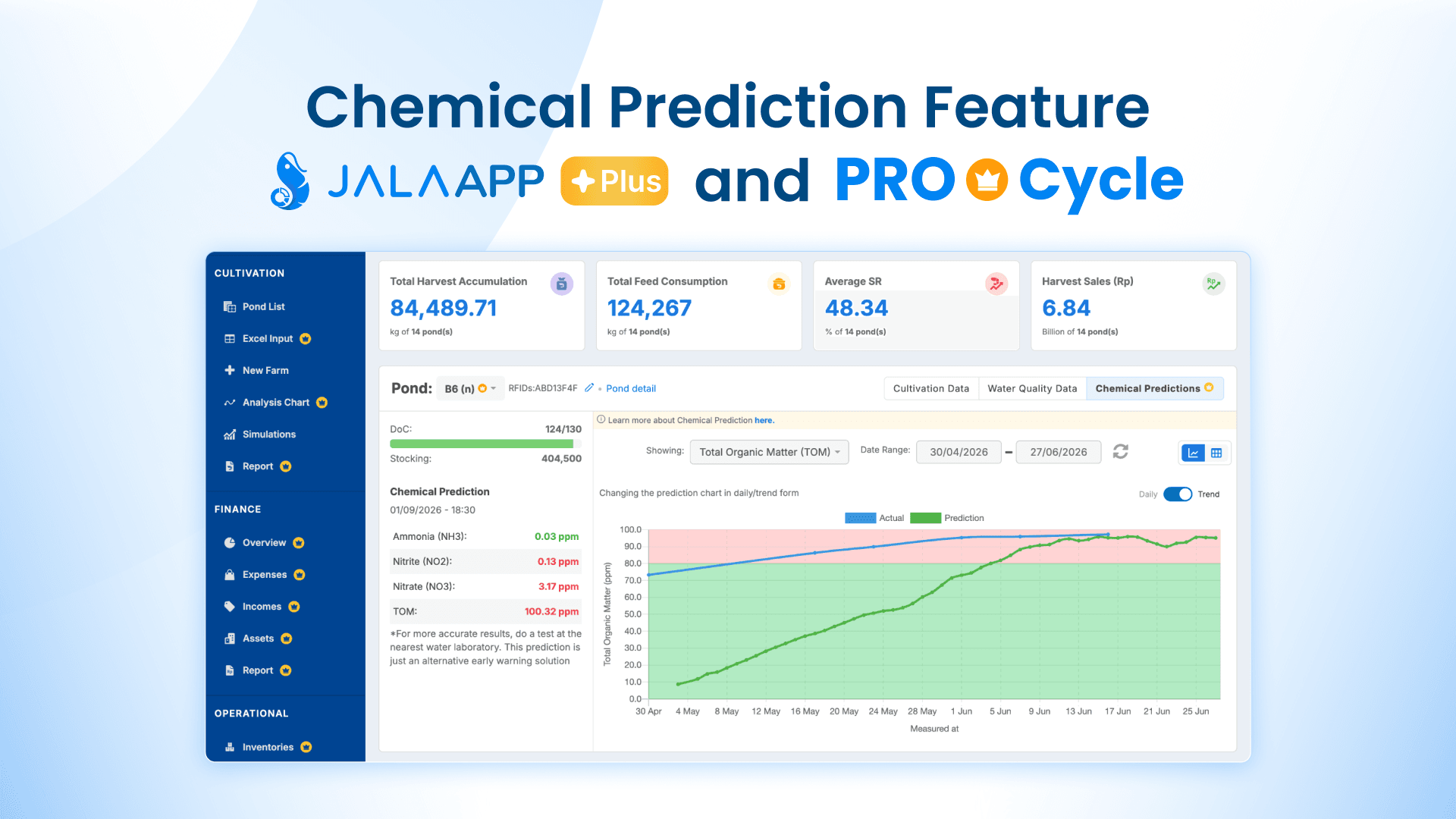 Chemical parameters such as ammonia, nitrite, alkalinity, and mineral availability can be difficult to monitor without regular laboratory testing. For JALA App Plus and Pro Cycle users, the Chemical Prediction feature uses AI-powered shrimp farming algorithms to predict changes in water quality variables based on historical feed, temperature, DO, salinity, and pH data. These insights can help farmers take preventive action before water quality starts to deteriorate.
9. Shrimp Price
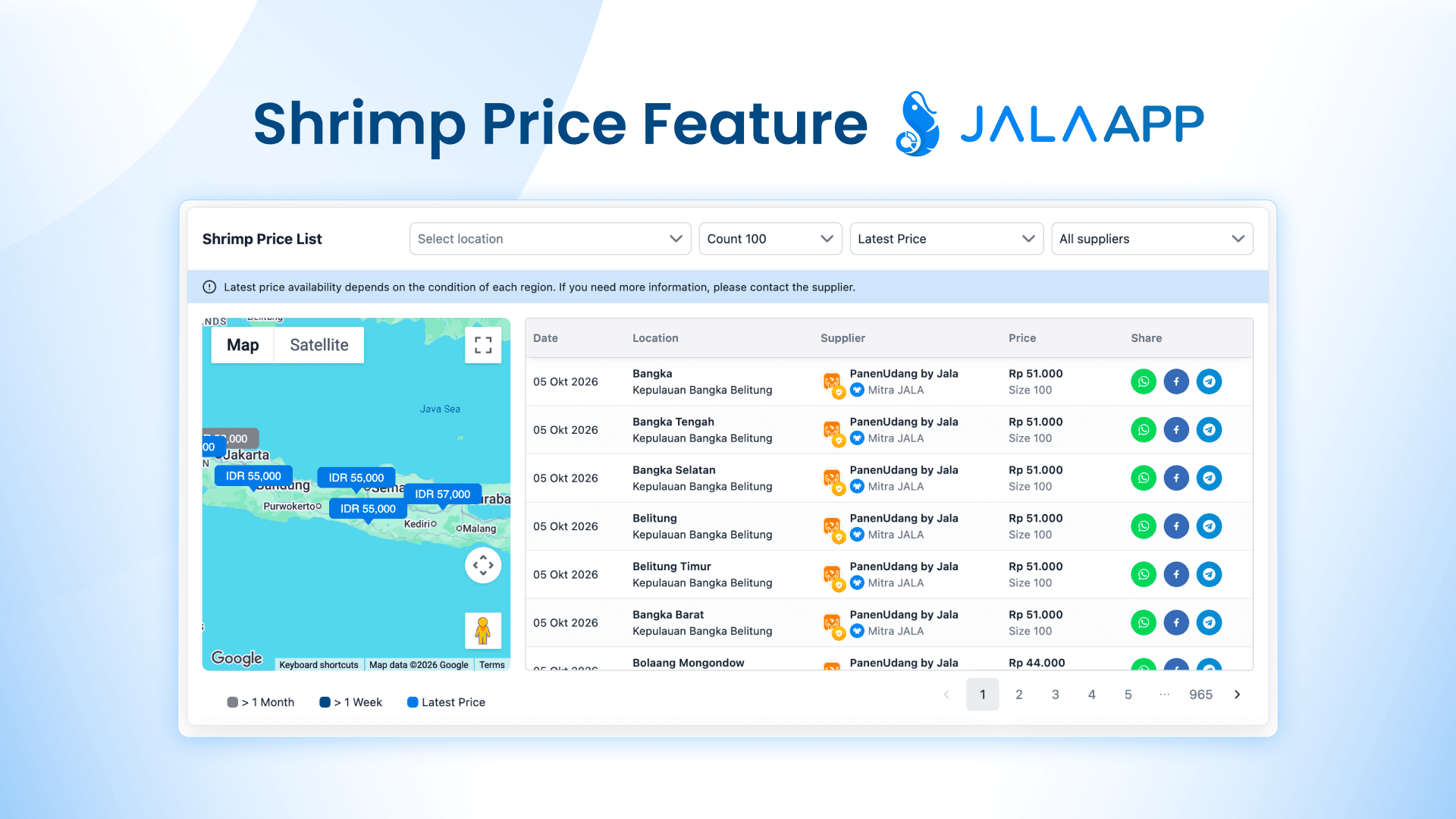 Choosing the right harvest timing can have a significant impact on the profitability of a shrimp farming business. The Shrimp Prices feature provides up-to-date shrimp price information from different regions across Indonesia. Farmers can check prices based on shrimp count and use the information to plan harvest timing and transactions more effectively.
10. Smart Cultivation Report
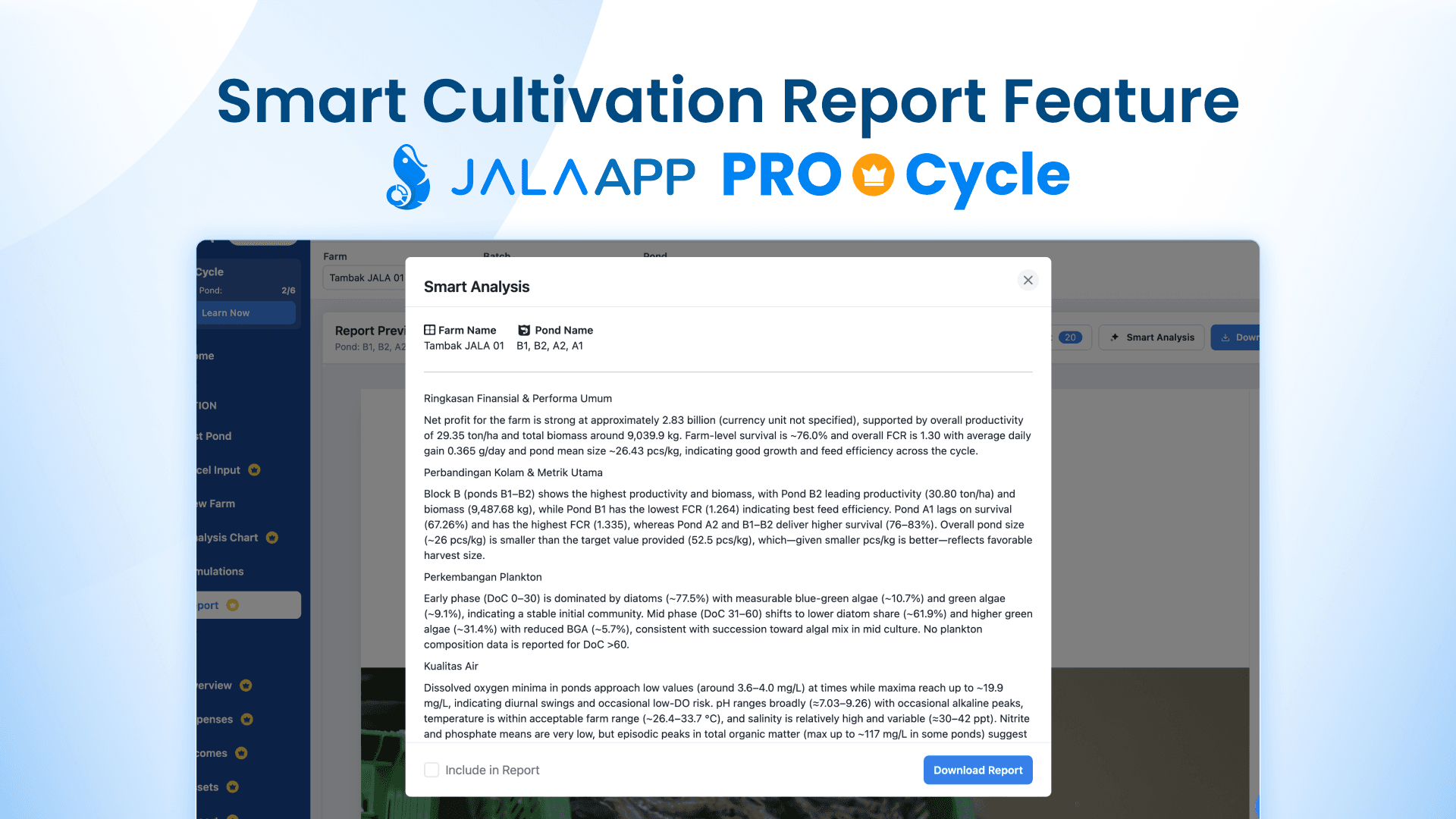 For Pro Cycle users, all the data entered into JALA App can be automatically transformed by AI into comprehensive and easy-to-understand reports. These reports cover both cultivation performance and business aspects, helping farmers to:
- Review overall cultivation performance and production results.
- Understand the farm's financial condition, including costs and estimated profits.
- Compare performance across ponds and cultivation cycles.
- Identify factors that may affect performance, such as hatchery and feed.
Conclusion
Digital technology is becoming an increasingly important part of modern shrimp farm management, helping farmers improve productivity, control operational costs, and minimize the risks of failures. By utilizing the various features available in JALA App, farmers can make more precise, data-driven decisions throughout every stage of the cultivation cycle.

If you want access to more comprehensive monitoring and analysis features, consider upgrading to JALA App Plus for an enhanced mobile experience across all your ponds. For more in-depth, pond-level analysis through the web, upgrade to Pro Cycle.