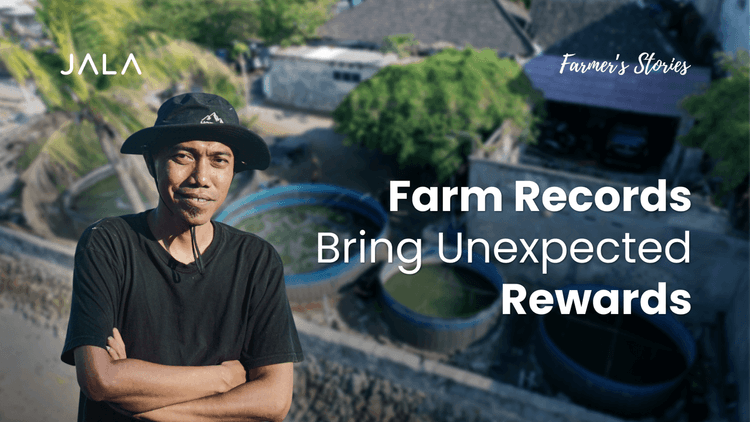
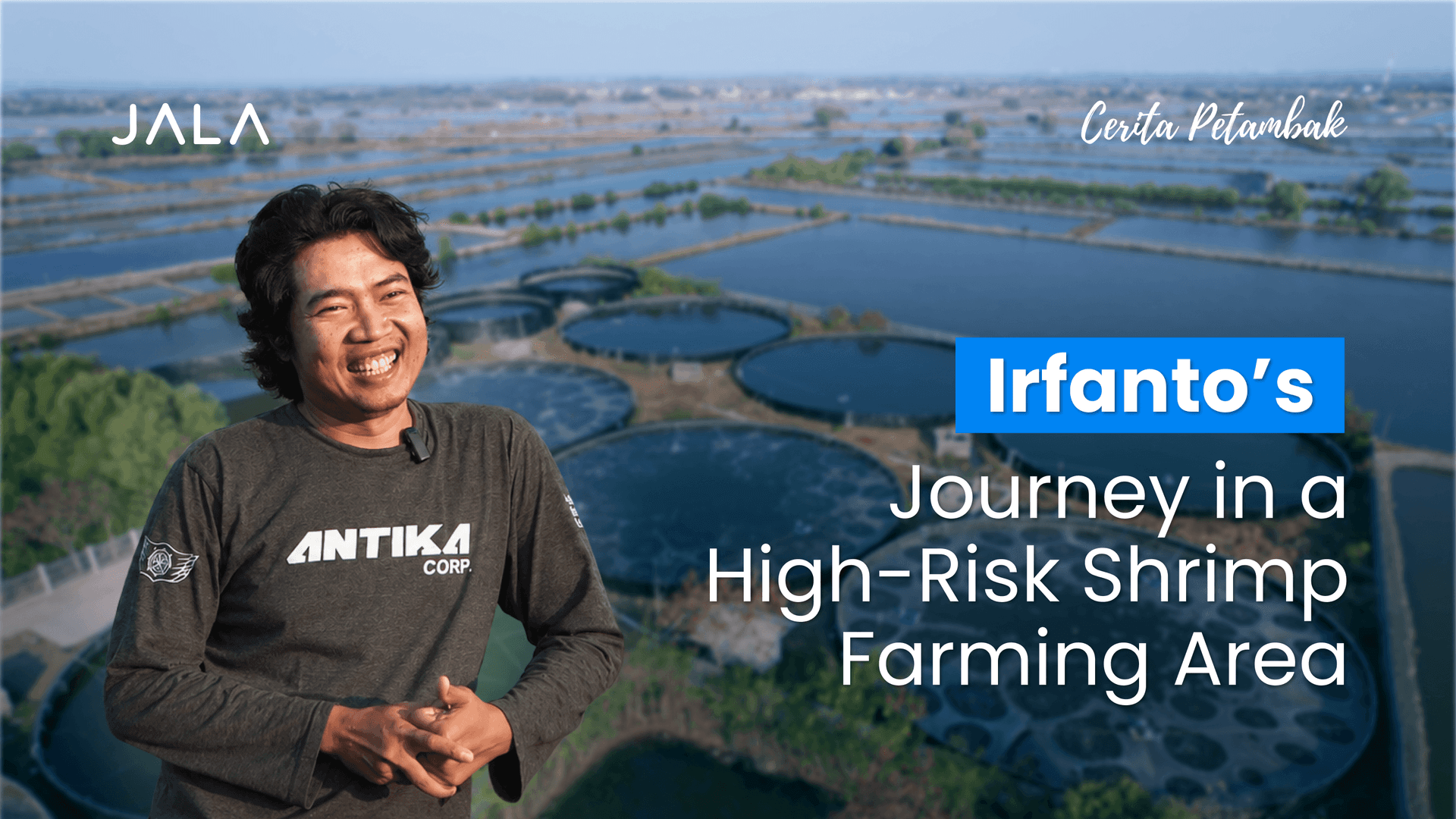
Having no prior experience in shrimp cultivation did not stop Irfanto from getting started. During his first two years, he experienced repeated harvest failures and ongoing shrimp disease outbreaks. Instead of giving up, these challenges motivated him to keep learning and find a cultivation approach that worked for his conditions. Discover Irfanto’s shrimp farming journey in Indramayu, West Java.
It Started with a Desire to Work Closer to Home
Before managing a farm, Irfanto worked as an environmental consultant for 2-3 years. His opportunity to enter the shrimp farming industry came when his family asked him to manage a farm they already owned. After graduating with a degree in Fisheries, he decided to take on the opportunity.
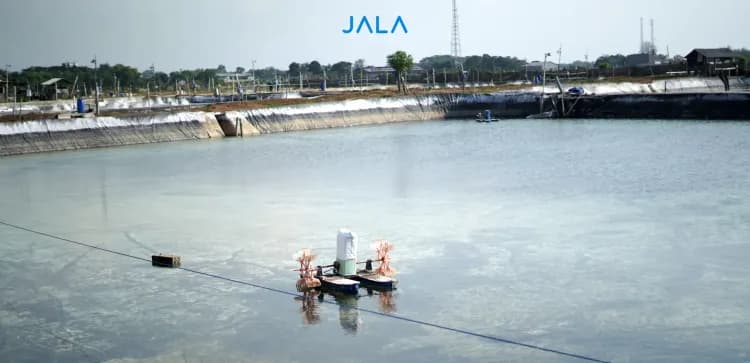
The biggest challenge was that Irfanto had no experience managing a shrimp farm. He had never even seen a paddlewheel before. Rather than backing down, he made use of the connections he already had, including a friend who worked as a shrimp feed salesperson. He began joining his friend on visits to different shrimp farms.
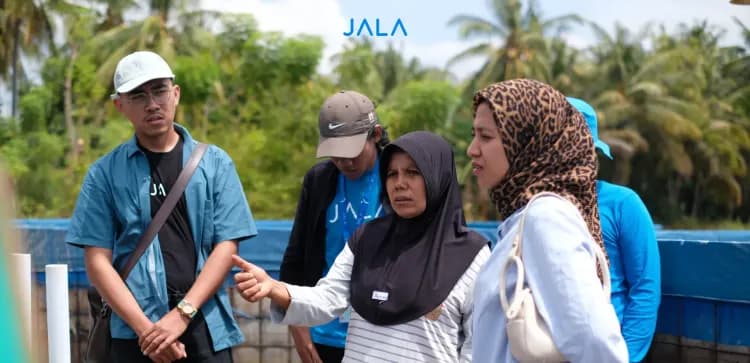
These trips were more than just casual visits. Irfanto used the opportunity to observe farming conditions firsthand and exchange knowledge with other farmers. “Feed salespeople visit many farms, so I would just tag along. I could learn while seeing how other farmers managed their ponds”, Irfanto explained. Little by little, these experiences helped him understand how cultivation worked in the field. Eventually, when he decided to build and manage his own farm, he relied on what he had learned through firsthand experience and discussions with his peers.
Two Years of Learning Through Failure
Becoming a shrimp farmer turned out to be far more challenging than Irfanto had imagined. His first two years were filled with setbacks. His farm was located in an area considered a high-risk zone for shrimp farming, making disease outbreaks one of his biggest challenges. His ponds were vulnerable to diseases such as WFD, AHPND, and EHP.
However, disease was not the only source of failure. The square ponds he initially used also became part of the problem. After experiencing repeated failures, Irfanto decided it was time to change his approach. He moved to a new location and changed his shrimp pond design, switching from square ponds to circular ponds. The new setup provided farming conditions and a water source that he considered more suitable for his operation.
Through these experiences, Irfanto realized that cultivation is not simply about achieving the highest possible production. More importantly, farmers need to find a farming pattern that matches their farm’s specific conditions.
Not Chasing Count, Keeping Shrimp Alive and Profitable Matters Most
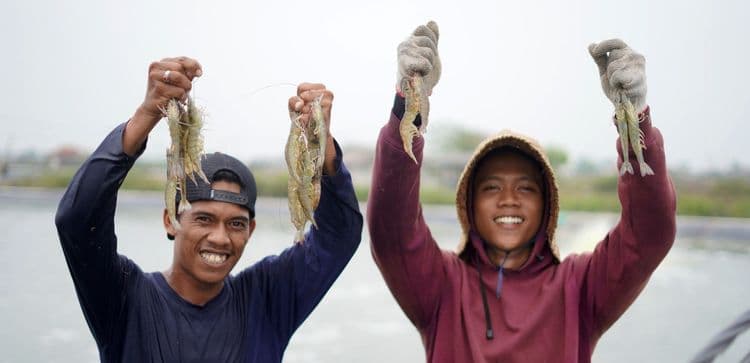
One principle Irfanto now follows is not setting a specific DoC or shrimp count as his primary harvest target. “What matters is that the shrimp survive, stay healthy, and remain profitable”, he said. Instead, his focus is on generating profit by controlling production costs, particularly through feed efficiency and FCR management.
One strategy he applies is fasting the shrimp after sampling. This helps him adjust feed allocation according to the shrimp’s actual condition while reducing the risk of overfeeding. For Irfanto, cultivation is a continuous process of finding the right pattern. As long as there are no significant problems, he prefers not to make unnecessary changes to feed or post-larvae. Changing SOPs too frequently can make the cultivation process more difficult to control.
Leveraging Technology to Capture Overlooked Data
Technical challenges were not the only difficulties Irfanto faced. Managing administrative tasks manually was also demanding, especially since he handled many of them himself. His responsibilities included recording farm data, calculating feed requirements, managing employee salaries, and handling purchasing.
This eventually led Irfanto to try Baruni. With Baruni, water quality measurements can be automatically connected to the JALA App. After measurements are taken, the data can be recorded directly without having to enter each value manually. This not only saves time but also makes the collected data easier to analyze and use for decision making.
In addition to Baruni, Irfanto also uses the Shrimp Price feature in the JALA App. The information provides an additional reference when determining harvest strategies and evaluating the potential profitability of an ongoing farming cycle.
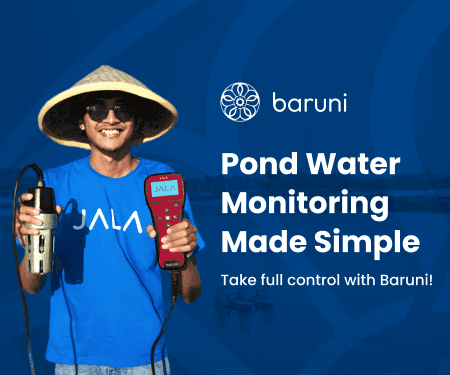
Like Irfanto, you can make shrimp farming more efficient with Baruni and the JALA App. Automatically monitor key water quality parameters such as DO, temperature, pH, salinity, and ORP, record cultivation data with less manual work, and access shrimp price information to make more informed cultivation decisions.