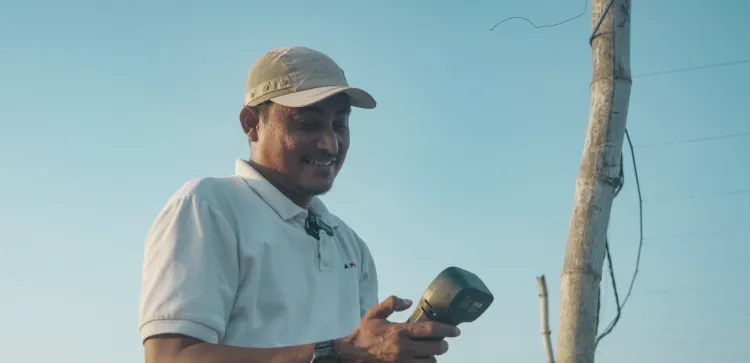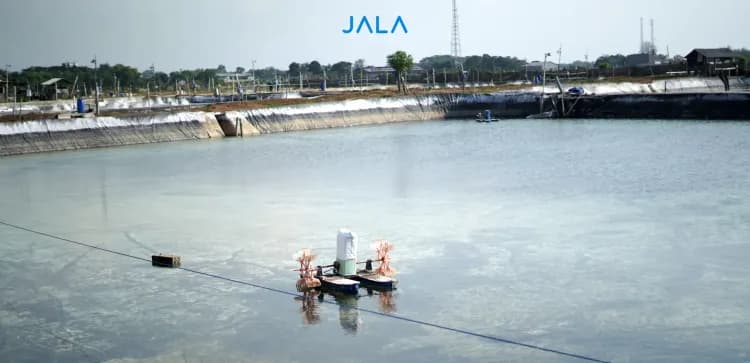
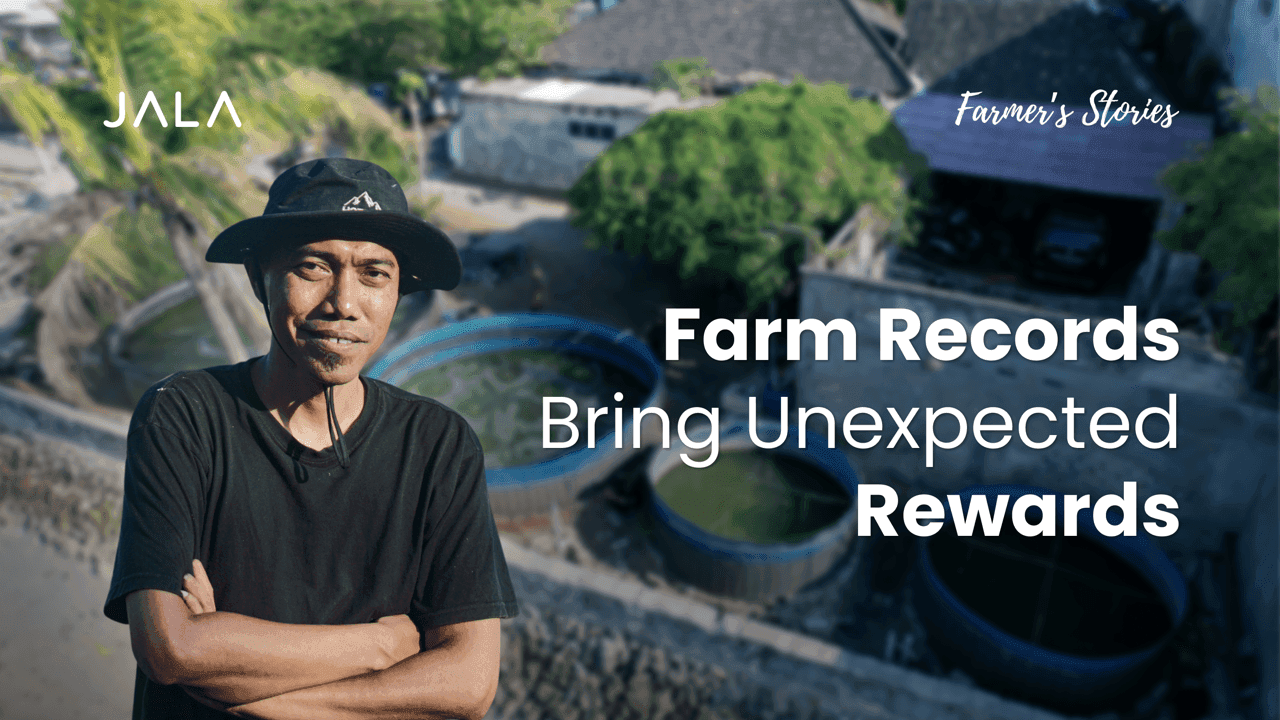
Who says vannamei shrimp farming always requires hectares of land and a massive investment? Choirudy, a shrimp farmer from Lamongan, East Java, has shown that a shrimp farming journey can start with the courage to try, even from a small backyard setup.
Driven by curiosity and a desire to try something new, Choirudy’s journey offers an inspiring perspective for independent small-scale shrimp farmers in Indonesia.
Finding a Potential Market with Four Simple Ponds
Choirudy started cultivation because he wanted to try something new on a small scale. With previous experience in livestock farming, he began with four simple ponds in his backyard. He learned gradually, even observing shrimp in an aquarium to understand their behavior, environmental conditions, and waste.
One unexpected opportunity came from a demand Choirudy had never anticipated. “There are quite a lot of anglers from outside the area who need live shrimp as fishing bait”, he explained.
The selling process is also relatively straightforward. Buyers come directly to the farm to collect the shrimp, and shrimp count does not affect the price. This opportunity has helped keep his cultivation cycles running. After completing one cycle, Choirudy usually only needs a few days to prepare the ponds before starting the next cycle.
Learning from Challenges in Cultivation
As someone who was initially new to shrimp cultivation, Choirudy faced various challenges along the way. He has encountered WFD and AHPND, which encouraged him to learn how to identify shrimp health issues and find relevant information when problems occurred. One important lesson he learned was the importance of choosing quality and certified post-larvae from a reliable hatchery to help reduce risks.
With his four ponds, Choirudy also keeps his cultivation approach simple and adjusts his management practices based on the shrimp’s condition.
- Feed is adjusted according to shrimp growth and condition rather than following a fixed schedule alone.
- Excessive feeding can put more pressure on water quality and increase waste accumulation.
- During molting, feeding can be temporarily stopped and gradually resumed once the shrimp begin to recover.
- Since his cultivation system relies heavily on aerators, maintaining a reliable power supply is an important part of farm management.
Managing the Farm More Practically and Efficiently
Choirudy initially recorded his cultivation activities manually on paper before switching to Excel and creating his own formulas. However, as his cultivation activities grew and he managed the entire operation on his own without employees, this approach became increasingly time-consuming.
He eventually discovered JALA App, which he uses to record daily activities and monitor the progress of each cultivation cycle. Some of the benefits he finds most useful include:
- Daily cultivation activities can be entered directly using an existing format.
- Feed, temperature, and sampling data can be tracked to monitor the condition of each cycle.
- The Farm Calculator features help estimate biomass and potential harvests without having to create formulas manually.
- The Simulation feature helps estimate stocking plans and pond capacity based on target growth.

For Choirudy, record-keeping is more than simply storing data. The data helps him track the progress of his farm from day to day and provides useful insights when evaluating the next cycle.
Bonus from Consistent Farm Record-Keeping
As a JALA App user, Choirudy was automatically part of the Legacy Challenge. His routine record-keeping then helped him earn points through the program. He even redeemed his points for a JALA App Plus voucher, giving him access to premium features to support his shrimp farming management.
His consistent participation also placed Choirudy among the top participants in the Legacy Challenge. For him, this position was an added bonus from a habit he was already practicing to support his daily farming activities.
You can also follow Choirudy’s journey in the Legacy Challenge by completing daily tasks on JALA App. The points you collect can be redeemed for monthly rewards, with grand prizes including Umrah trip and motorcycle at the end of the program period. There is still time to participate until the end of 2026.