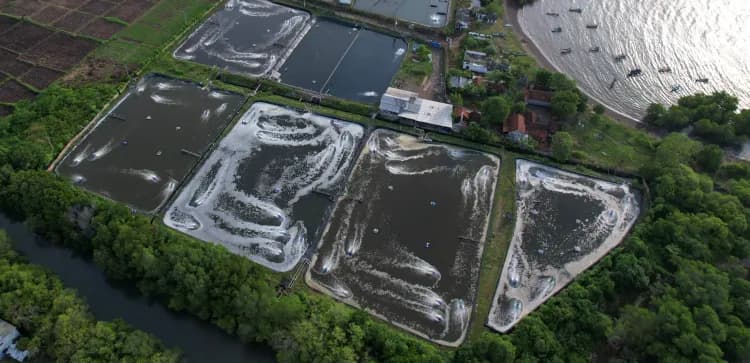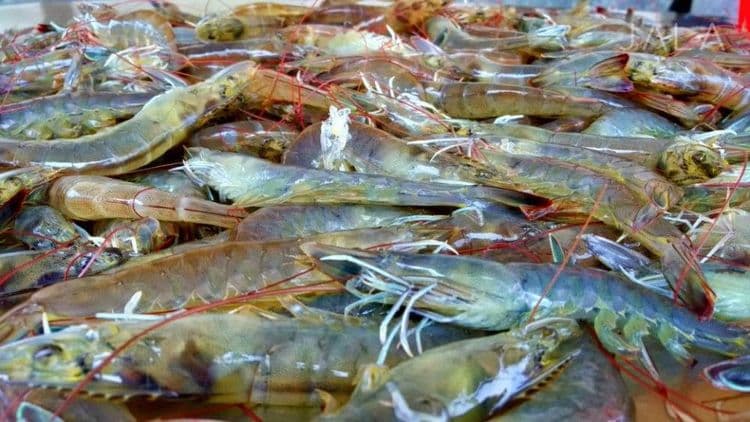
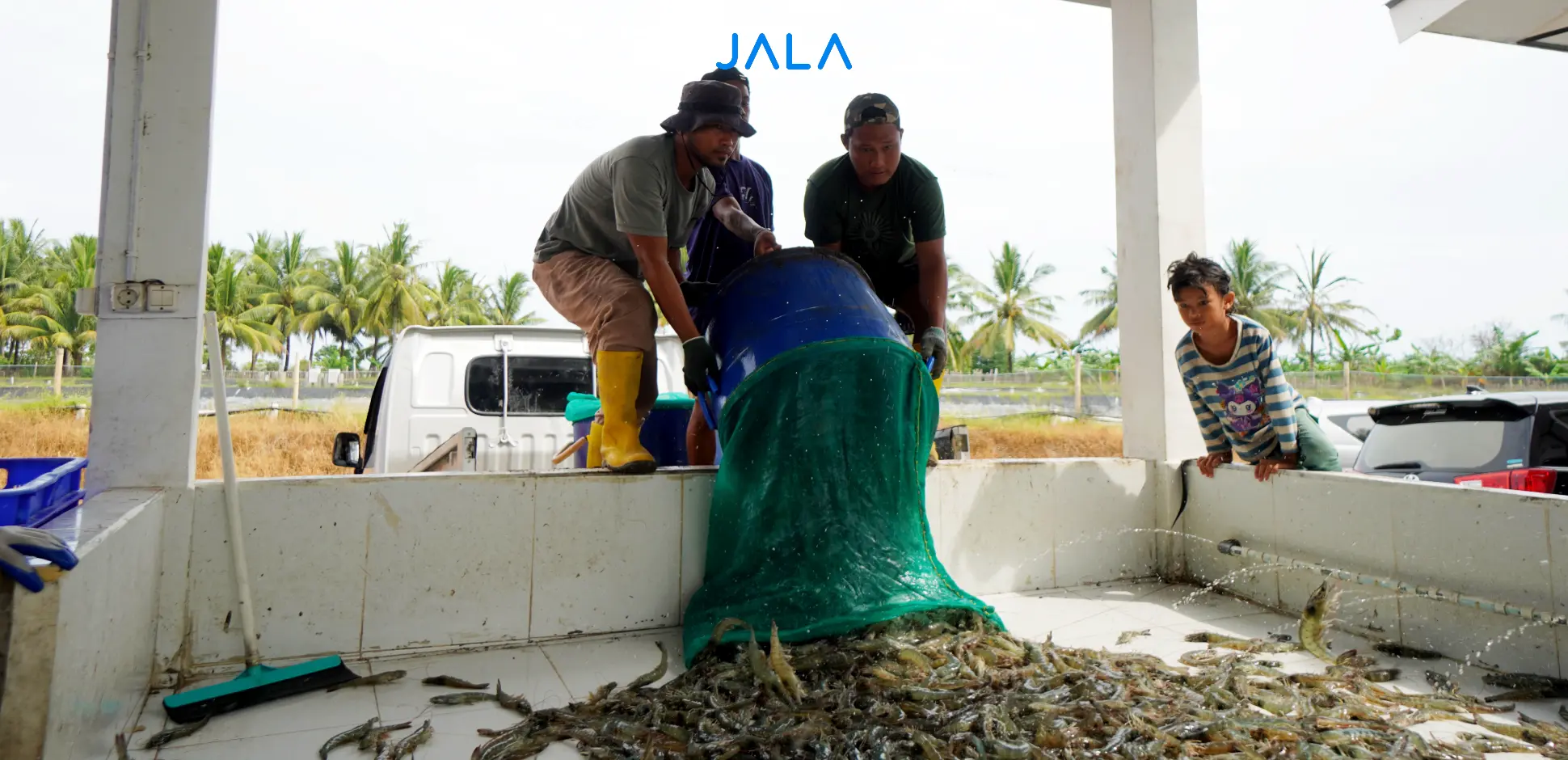
Shrimp cultivation is increasingly recognized as one of the most promising business sectors. This is largely driven by strong global demand for high value seafood commodities with attractive profit potential. As one of the world’s major shrimp exporters, Indonesia continues to make a significant contribution to the global market. According to Shrimp Insights, Indonesia supplied up to 201,113 tons of shrimp to the global market last year.
Although the initial investment and operating costs of vannamei shrimp farms can be substantial, the potential returns from shrimp market prices remain highly attractive. Looking at the latest trends in 2026, Indonesia’s shrimp export business presents growing opportunities for both investors and local farmers.
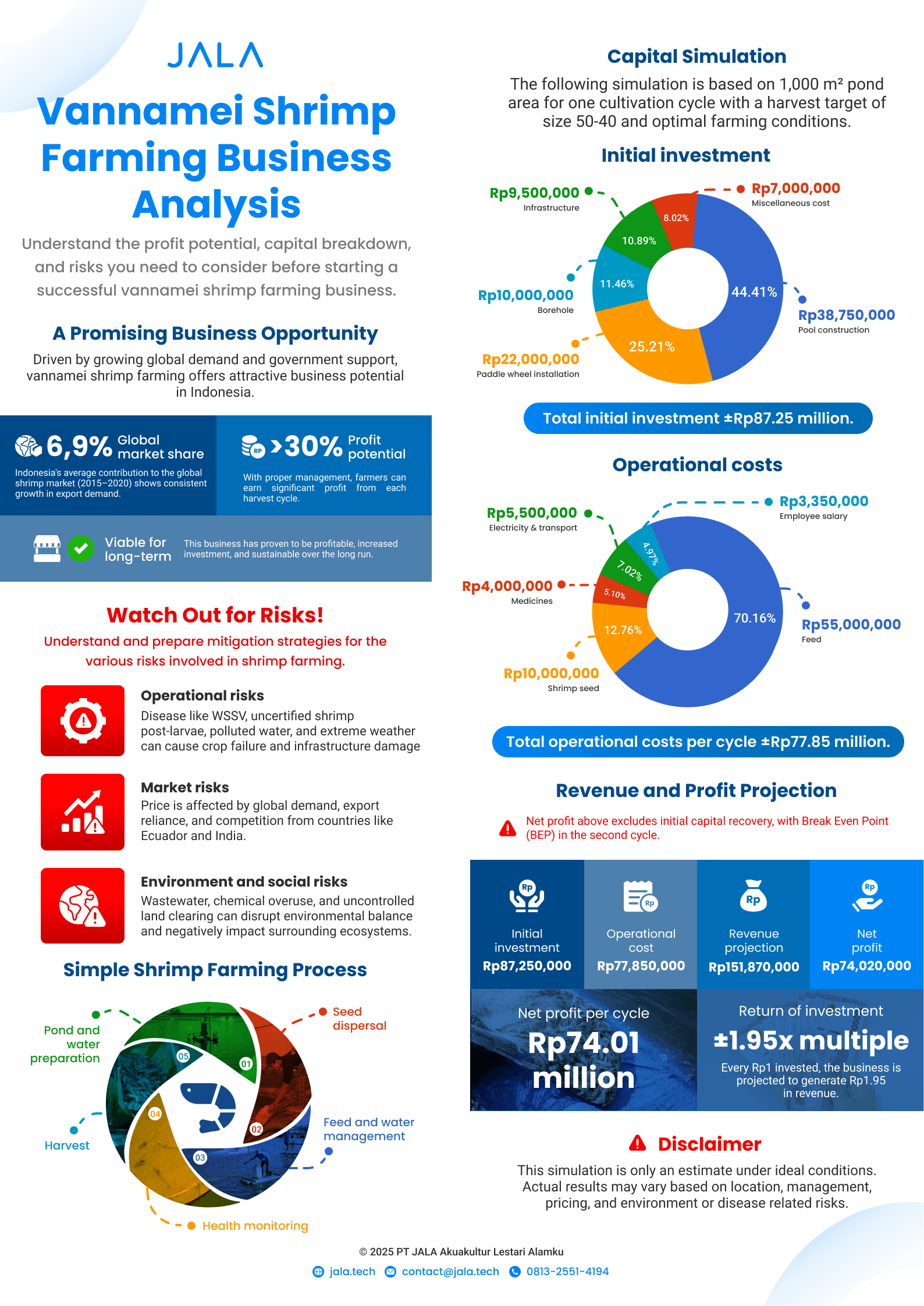
Why Shrimp Cultivation is a Promising Business
There are four main reasons why shrimp farming continues to attract attention as a profitable venture. Government support and market demand both play important roles in this growth.
1. Government support through revitalization
Indonesian government, through the Ministry of Marine Affairs and Fisheries, actively supports shrimp pond revitalization programs, mainly targeting traditional shrimp farms. This initiative is part of a broader national aquaculture transformation under the blue economy framework, focusing on increasing productivity, modernizing farming systems, and ensuring environmental sustainability.