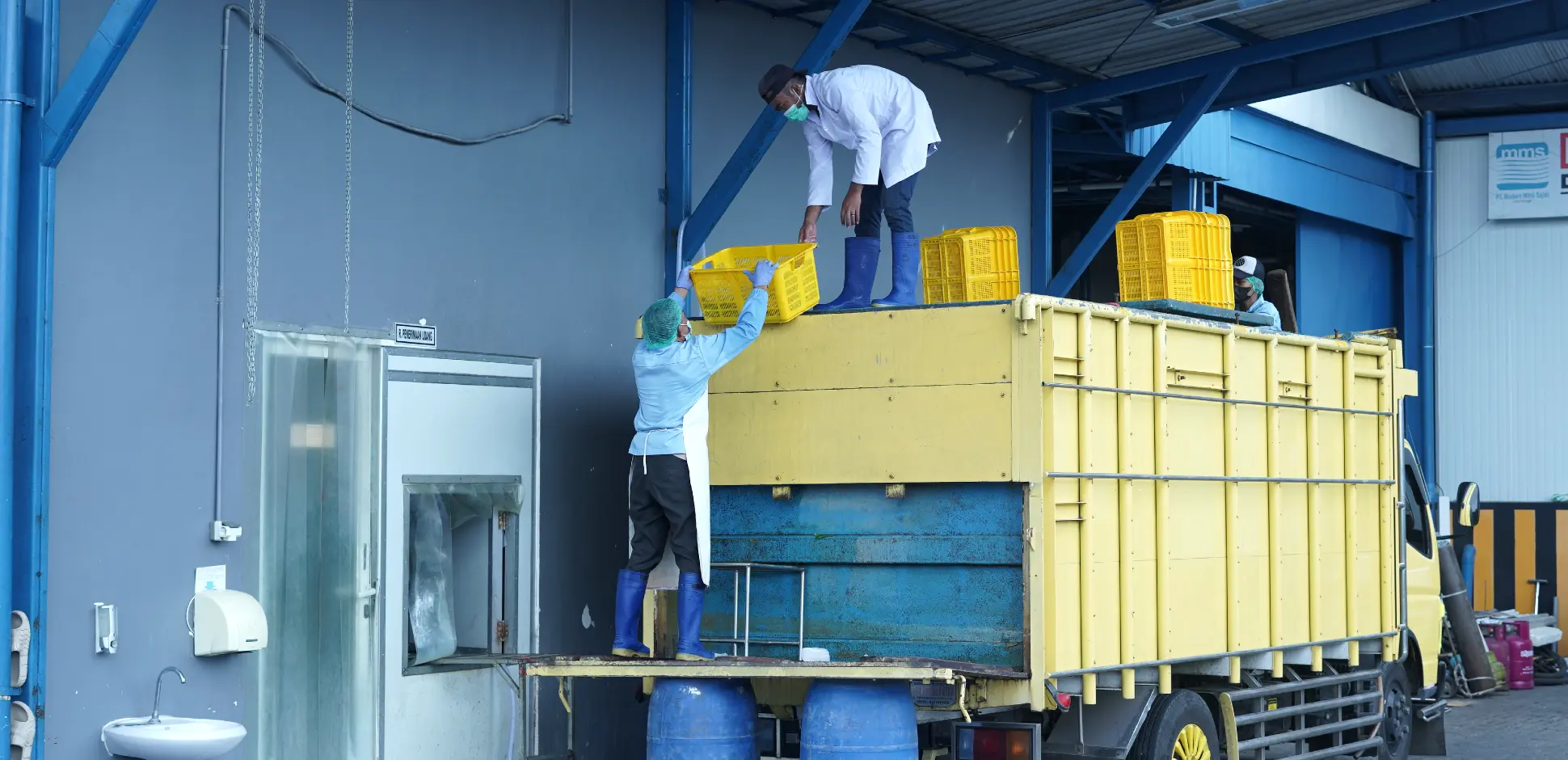
Indonesia’s shrimp industry is currently facing renewed discussion over the entry of imported shrimp from Ecuador. The issue has drawn serious attention from farmers and upstream industry players, amid concerns that the practice could create ripple effects across the sustainability of Indonesia’s shrimp industry ecosystem.
So, how can imported shrimp enter Indonesia, what regulations allow it, and what steps can be taken to protect and strengthen the national shrimp industry?
Imported Shrimp and the Regulatory Gap
Reports of 120 tons of shrimp from Ecuador entering through Tanjung Perak Port in East Java have been confirmed by the Ministry of Marine Affairs and Fisheries (KKP). While this volume is relatively small compared with Indonesia’s total shrimp export volume, which reached 94,504 tons throughout 2026 (source: Shrimp Insights), the entry of imported shrimp has raised concerns among industry stakeholders due to a regulatory gap that allows such imports to take place.
KKP confirmed that it had never issued an Import Quota Plan for the shrimp in question. The shipment was able to enter Indonesia by utilizing the bonded zone scheme. Under the bonded zone regulations, as stipulated in Minister of Finance Regulation No. 65/PMK.04/2021, processing facilities are permitted to legally import raw materials specifically for further processing and re-export to other countries, rather than for sale in the domestic market.
Meanwhile, general import procedures currently governed by Minister of Trade Regulation No. 38 of 2025 and its customs regulations (KMK No. 34/KM.4/2025) do not yet require an Import Approval or a specific Import Quota Plan for imports entering through the bonded zone scheme.
This lack of alignment between regulations creates a gap through which shrimp imports can enter without an import quota issued by KKP. Although the imports are considered administratively legal and health inspections conducted by the Indonesian Quarantine Agency found the shrimp negative for White Spot Syndrome Virus (WSSV), the case has raised broader questions about its potential impact on Indonesia’s shrimp industry ecosystem.
Impact Across the Upstream and Downstream
At first glance, importing raw materials may seem reasonable from a processing business efficiency perspective. However, shrimp is Indonesia’s highest-value fisheries export commodity, reaching USD 872.71 million as of June 2026 (KKP), significantly ahead of Tuna-Tongkol-Cakalang at USD 490.44 million and Squid-Cuttlefish-Octopus at USD 433.49 million.
If this practice continues without proper oversight, it could pose hidden risks to one of Indonesia’s most important fisheries commodities.
- Lessons from Vietnam’s shrimp industry: Vietnam provides a clear example of what can happen when 60-70% of shrimp processing raw materials depend on imports. As a result, its upstream industries from local farmers and hatcheries to feed producers have struggled to grow and maintain competitiveness.
- Risks to the local economic chain: If processing facilities become increasingly reliant on imported shrimp, locally farmed shrimp could face weaker demand. This could put downward pressure on farm-gate prices and weaken economic activity in shrimp producing regions.
- Impact on employment: The practice could also put pressure on the Agriculture, Forestry, and Fisheries sector, which supported 42.49 million jobs as of February 2026 (BPS). Coastal communities, in particular, could face risks to the sustainability of their livelihoods.

Government Efforts to Protect Indonesia’s Shrimp Industry
In response to developments on the ground, KKP has sealed 1,048 tons of imported shrimp belonging to shrimp processing companies PT Baramuda Bahari and Mega Marine Pride (Kompas), as well as 144 tons from PT Bumi Menara Internusa (Detik). It is important to note that the sealed shrimp were not vannamei, meaning they do not directly affect the local vannamei cultivation supply chain.
The action was taken as part of government oversight following indications that imported commodities may have been used outside their intended purpose, potentially affecting the domestic market and putting downward pressure on local farmers’ harvest prices. On the other hand, the companies stated that the raw materials had been legally imported for further processing and re-export, and that KKP’s sealing action lacked a legal basis.
KKP has also called on shrimp processing companies to prioritize domestically farmed vannamei shrimp, as reported by Bisnis.com. This approach highlights the importance of aligning the quality, volume, and continuity of local supply so that processing facilities and upstream farmers can strengthen one another while providing greater market certainty for domestic farmers.
Beyond market policies, the government also has an opportunity to strengthen biosecurity controls at the country’s points of entry. The Indonesian Quarantine Agency could implement risk-based inspections as part of this effort. Stronger controls would serve as a safeguard against the introduction of shrimp pathogens from abroad, helping protect local farms from the risk of cross-contamination.
A Collective Effort to Build a More Resilient Shrimp Industry
KKP’s response to the latest import developments demonstrates the government’s attention to concerns raised by farmers and the importance of protecting the long-term sustainability of Indonesia’s shrimp industry. This should be followed by efforts to align existing regulations and close regulatory gaps, ensuring that locally farmed vannamei shrimp remain a priority for the country’s processing industry.
Government oversight also needs to go hand in hand with legal certainty for businesses. With companies questioning the legal basis for the sealing actions, strengthening import regulations and trade procedures is an important step toward providing clearer rules. This would help protect Indonesian shrimp farmers while also giving businesses greater legal certainty in conducting their operations.