Thailand’s shrimp industry has undergone a remarkable transformation over the past two decades. Once a dominant player in the global shrimp market, the industry faced significant challenges during the Early Mortality Syndrome (EMS) outbreak between 2011-2013, which reduced production by 30–40%. To remain competitive amid growing pressure from major shrimp-producing countries such as Ecuador and India, Thailand reshaped its aquaculture strategy by embracing technology-driven cultivation practices and encouraging the active involvement of a new generation of shrimp farmers.
EMS Crisis and a Turning Point for the Industry
During the 1980-1990s, global demand for shrimp increased rapidly. This trend encouraged many producing countries, including Thailand to adopt intensive farming systems. While intensive farming generated substantial short-term profits, many operations overlooked environmental carrying capacity and long-term sustainability. As a result, Thailand’s black tiger shrimp (Penaeus monodon) industry began to decline in the early 2000s due to increasing vulnerability to disease outbreaks and pathogens.
To address this challenge, farmers shifted to vannamei shrimp (Litopenaeus vannamei), which offered faster growth rates and greater disease resistance. However, weaknesses in biosecurity and water management eventually led to another major crisis. Between 2011-2012, EMS, also known as Acute Hepatopancreatic Necrosis Disease (AHPND), struck key shrimp-producing regions such as Chanthaburi and Songkhla, causing severe impacts:
- Thailand’s shrimp production dropped dramatically from 603,000 tons in 2011 to 263,000 tons in 2014.
- Many small and medium-scale farmers went out of business due to the high costs of restoring contaminated ponds and restarting operations.
The Adoption of Intensive Farming 2.0
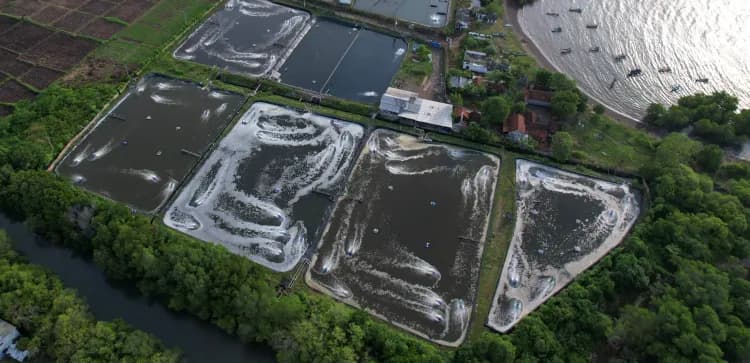
The recovery of Thailand’s shrimp industry has been largely driven by the implementation of what is often referred to as Intensive Farming 2.0. This approach combines biosecurity, microbiological management, and operational efficiency to improve productivity while reducing stress and disease risks in shrimp culture.
- Automated waste removal systems (central drain): Ponds are designed with a central depression that collects feces, uneaten feed, and molted shells. These wastes are regularly removed through pumping systems, helping maintain better water quality and reducing the accumulation of harmful organic matter.
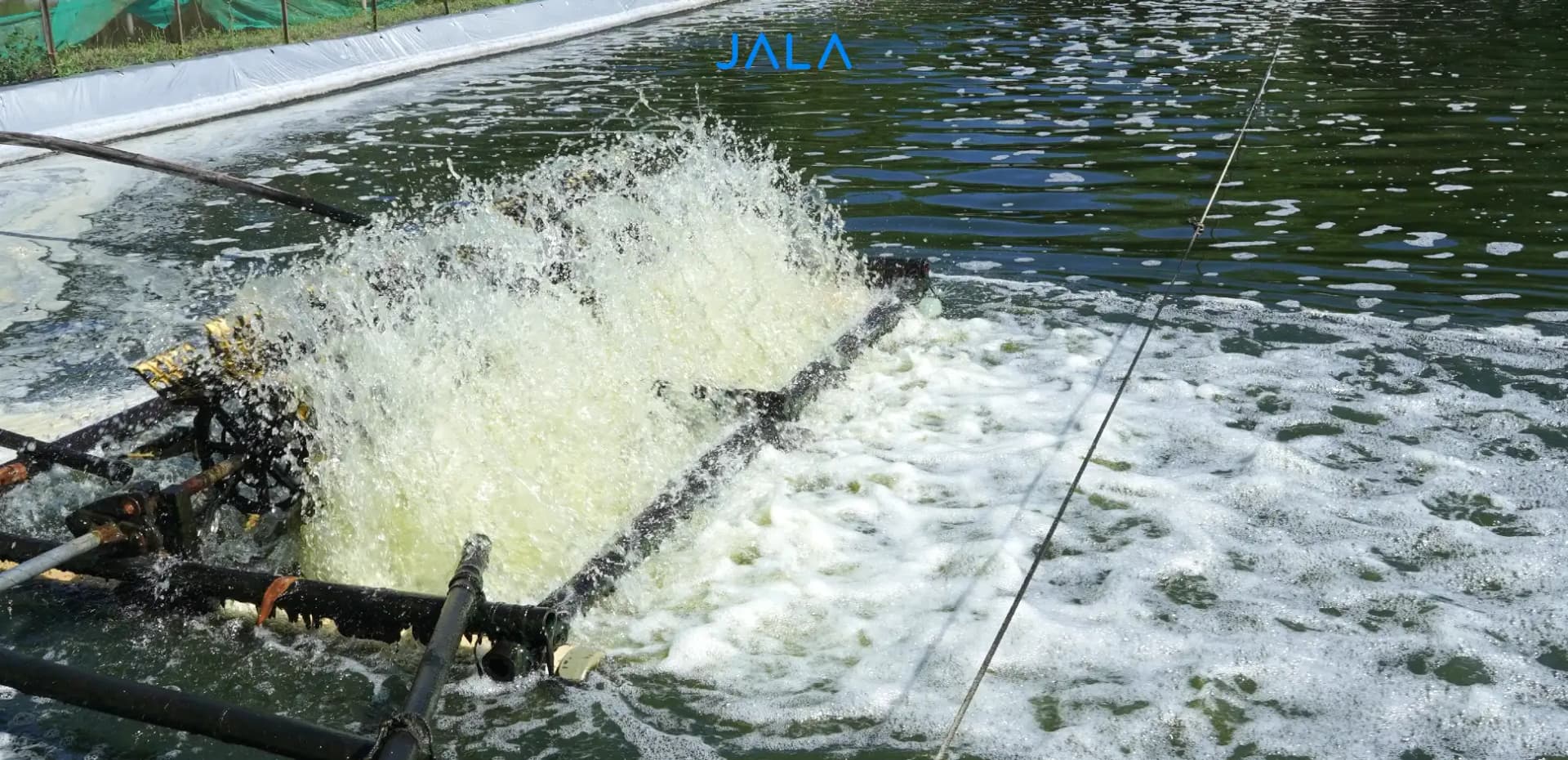
- Microbubble aeration technology: Traditional paddlewheel aerators are combined with microbubble oxygen delivery systems to maintain optimal dissolved oxygen levels throughout the culture period, also helps suppress the growth of vibrio.
- Probiotic-based biological management: Beneficial bacteria are widely applied to improve pond microbiology, inhibit pathogenic bacteria, and support shrimp digestion and nutrient absorption without relying heavily on antibiotics.
- Automation and smart farming: Modern Thai farms increasingly utilize Internet of Things (IoT) devices for real-time water quality monitoring. Artificial intelligence (AI)-based automation systems are also being adopted to improve operational efficiency and reduce production costs.
The Rise of a New Generation of Shrimp Farmers
The successful implementation of Intensive Farming 2.0 requires strong technical skills and a willingness to adopt innovation. Corporate partnership networks have played an important role in supporting this transition. One example is Rubicon Resources, a subsidiary of Canada-based High Liner Foods, which works with more than 1,800 local shrimp farmers through an integrated production network.
Both industry stakeholders and government institutions have actively encouraged younger generations to enter the sector. These new farmers generally:
- Possess formal education or technical training in modern aquaculture.
- Recognize that long-term profitability depends on environmental responsibility, animal welfare, and product traceability.
Thailand’s Value Added Strategy
Countries such as Ecuador have become global leaders in supplying large volumes of low-cost raw shrimp. This market dynamic has made it increasingly difficult for Thailand to compete solely as a bulk commodity exporter, especially given its relatively higher domestic operating and logistics costs.
As a result, Thailand has shifted its focus toward value added shrimp products and cold chain optimization:
- Producing ready-to-cook and ready-to-eat products such as Peeled and Deveined shrimp (PND), shrimp soup, Individually Quick Frozen (IQF) products, dimsum, and other premium processed seafood products.
- Targeting markets with stringent food safety and quality standards, including United States, Canada, the European Union, and Japan.
- Expanding into upper-middle-class consumer segments in major Chinese cities that demand convenient, hygienic, and premium quality seafood products.
Thailand’s Export Performance
Thailand’s shrimp export strategy is currently focused on diversifying into premium markets and strengthening its value added product portfolio to stay competitive in the increasingly challenging global market.
- Growth in China market: Thailand’s shrimp exports to China recorded a 19% increase in volume, reaching 27,739 tons. This growth highlights the success of Thailand’s strategy in targeting the country’s expanding middle and upper income consumer segments.
- Performance in US market: Thailand secured a total annual export volume of 26,958 tons to the US. The market has also shown encouraging signs of recovery, with export volumes increasing by 7% YoY during January–April 2026 compared to the same period in the previous year.
Conclusion
Thailand’s shrimp industry transformation demonstrates that recovery from the EMS crisis was not achieved through simply increasing production volume. Instead, it was driven by a strategy focused on quality, efficiency, and innovation. By integrating AI and IoT based Intensive Farming 2.0 practices, fostering a new generation of environmentally conscious farmers, and shifting market focus toward premium value added products, Thailand has successfully strengthened its competitive position in the global shrimp market while building a more sustainable aquaculture industry for the future.
Reference
- Kittichotsatsawat, Y., et al. (2025). Enhancing Manufacturing Operations Within the Supply Chain for Sustainable Frozen Shrimp Production. MDPI Sustainability.
- Wyban, J. (2025). Current Trends, Challenges, and Genetic Innovations in the SPF Shrimp Broodstock Industry. Taylor & Francis.
- Rismawati, W., Napasintuwong, O., & Kuldilok, K. (2024). Comparison of Shrimp Aquaculture Production and Value Chain Mapping between Indonesia and Thailand. ARE Working Paper/AgEcon Search.
- Samanta, P. N., et al. (2025). Cold Chain and Shrimp Product Quality. Database Journal IICET.
- Paul, M. N., et al. (2025). A Review of Technological Developments in Shrimp Aquaculture Production. Kementerian Kelautan dan Perikanan RI.
- Chinese Shrimp Imports Down Slightly in 2025, But Value Increased | Seafood Source
- US Shrimp Imports Remain Below Last Year in April as Ecuador Gains Share | Shrimp Insights